
Discover the Cornish Language
An online resource for anyone interested in learning Cornish. Explore our phrasebook, vocabulary guides, FAQs, and a comprehensive directory of learning resources — from books and dictionaries to online courses and organisations.
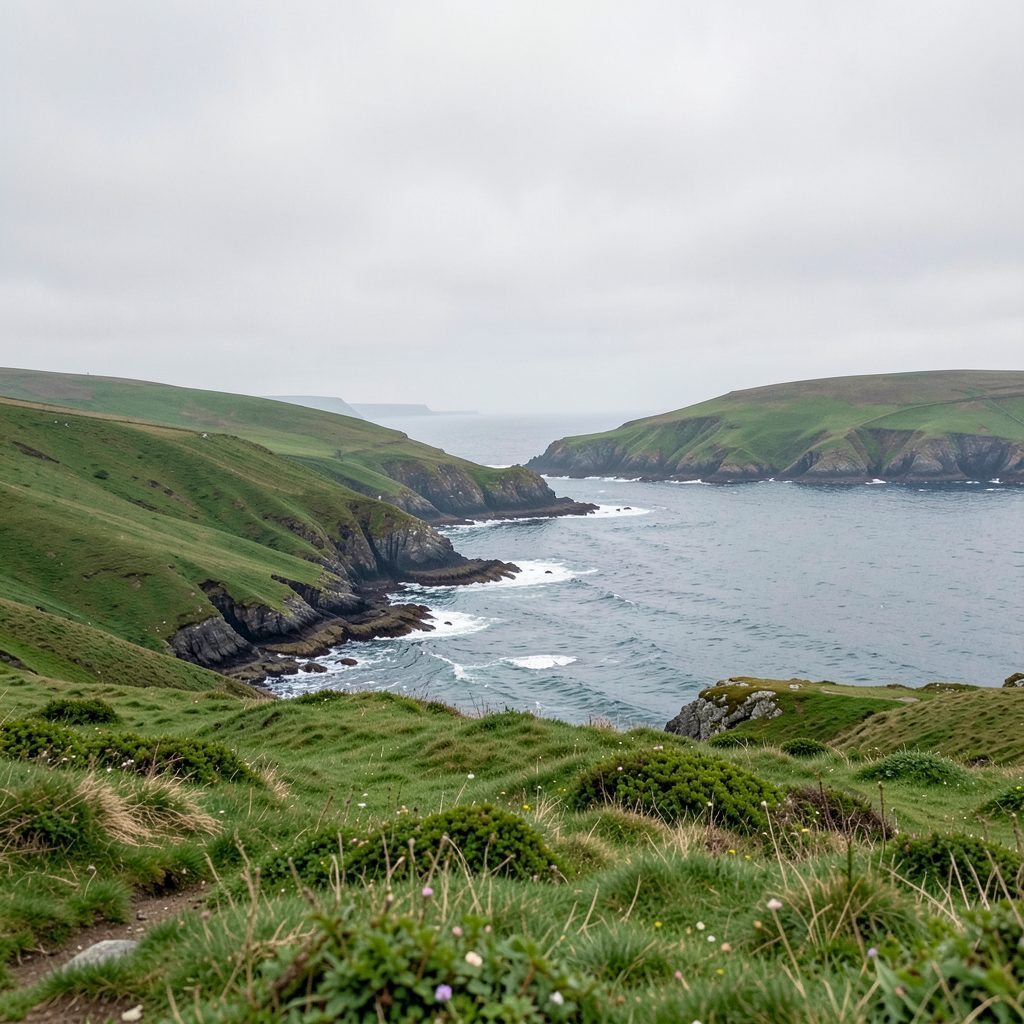
Dolly Pentreath And The Last Native Cornish Speakers
Dolly Pentreath has become one of the most recognisable figures in the history of the Cornish language. She is often described as the last native speaker of Cornish, a title that has carried her story from the fishing village of Mousehole into books, museums, language courses, and modern Cornish cultural movements.
The story is more complicated than the familiar phrase suggests. Pentreath was certainly an important late speaker, but surviving evidence points to other fluent speakers after her death. Understanding that distinction reveals how languages decline, how legends are formed, and why a language can be revived even after everyday community use has almost disappeared.
Who Dolly Pentreath Was
Dolly Pentreath was born around 1692 in or near Mousehole, west Cornwall. Her Cornish name is often given as Dorothy Pentreath, and she earned a living as a fish seller. Mousehole was part of a region where Cornish remained in use among older residents well into the eighteenth century, even as English became increasingly dominant in administration, education, trade, and public life.
She became famous through the writings of Daines Barrington, an English antiquarian who investigated the final speakers of Cornish. Barrington reported meeting Pentreath in the 1760s and described her as a woman who could speak Cornish fluently. He also recorded a strong impression of her personality, helping create the vivid image of an elderly woman defending her language in a changing world.
Pentreath died in 1777, and a monument was later erected in her memory at Paul, close to Mousehole. The memorial helped fix her place in public history. Yet memorials often simplify the past: calling her “the last Cornish speaker” made a powerful symbol, even though the linguistic evidence does not support such a straightforward ending.
What The Last Speaker Claim Means
The expression “last native speaker” needs careful interpretation. It may mean the last person raised with Cornish as a first language, the last person who spoke it fluently in daily life, or the last person who could use it without learning it from books. These categories are different, particularly when a language is retreating across generations.
Pentreath is frequently described as the last monoglot Cornish speaker, meaning someone who spoke only Cornish. That description is doubtful, since she appears to have had at least some English. A more cautious account presents her as one of the last native or traditional speakers of Cornish, rather than the final person who knew the language at all.
The distinction matters because language loss rarely happens at a single dramatic moment. A community may lose fluent children first, then regular household use, then specialist vocabulary. Older speakers can survive for decades after a language has stopped being naturally transmitted. The “last speaker” is therefore often a convenient historical label rather than a precise linguistic boundary.
The Evidence After Dolly
One important figure is William Bodinar, a fisherman from the Mousehole area. In a letter associated with Barrington’s research, Bodinar said that he remembered several people speaking Cornish when he was young. He was able to converse in Cornish and was still alive after Pentreath’s death. This makes it difficult to claim that she was literally the final person capable of speaking the language.
Another frequently mentioned figure is John Davey of Boswednack, who died in 1891. Davey is often regarded as the last traditional speaker, or at least the last person to inherit fragments of spoken Cornish from the old community rather than study it through revival materials. He is associated with a short text known as the “Cranken Rhyme,” although the exact level of his fluency remains debated.
These accounts do not diminish Pentreath’s importance. Instead, they show that the final phase of Cornish was spread across villages, families, memories, and partial records. A language can remain present in songs, place names, sayings, and isolated conversations after it has ceased to function as the main language of a whole community.
Cornish Within The Celtic Family
Cornish belongs to the Brythonic branch of the Celtic language family, alongside Welsh and Breton. It is historically related to the languages of Britain that developed from varieties of Brittonic, while Irish, Scottish Gaelic, and Manx belong to the Goidelic branch. Shared roots can be seen in vocabulary, grammar, and older patterns of place naming, though related languages are not automatically mutually understandable.
The decline of Cornish was shaped by several forces. English gained authority through government and commerce, while Cornwall became more closely connected to English institutions. Formal schooling generally operated in English, and economic change encouraged people to use the language associated with wider employment and social mobility. The shift was gradual, but by the eighteenth century Cornish had become concentrated in the far west.
For learners, this family relationship provides useful context rather than a shortcut to fluency. Someone who knows Welsh may recognise certain structures or words, while a speaker of Breton may notice familiar sounds and roots. A clear overview of the Celtic language family helps place Cornish within its wider historical setting without treating it as merely an old version of another language.
Why Her Story Matters In Australia
Cornish migration gives Dolly Pentreath’s story a direct connection with Australia. During the nineteenth century, miners and mining families from Cornwall settled in places such as Moonta and Burra in South Australia, as well as Ballarat and Bendigo in Victoria. These communities carried surnames, Methodist traditions, mining knowledge, recipes, music, and stories of Cornwall across the world.
In present-day Melbourne and Adelaide, Cornish heritage groups and cultural events keep some of that connection visible. A visitor may encounter Cornish dancing, mining displays, family-history projects, or a pasty at a specialist bakery or weekend food market. The pasty has become a particularly recognisable part of Cornish identity, although an Australian bakery may adapt its size, fillings, or pastry to local tastes.
Australia also illustrates the difference between cultural interest and formal language provision. The Commonwealth has no single legislated official language, while English is the dominant language of public administration and everyday life. Schools operate through state and territory systems, and the Australian Curriculum gives important recognition to Aboriginal and Torres Strait Islander languages; Cornish is not generally offered as a mainstream school subject. Learners therefore often rely on community organisations, libraries, digital resources, and independent study.
That setting can make online learning especially valuable for people in Sydney, Perth, Brisbane, or regional towns who cannot attend a Cornish gathering in person. It also suits Australian routines, where a short lesson before work, a listening session during a commute, or a weekly study group can fit more easily than regular travel to a specialist class.
Clues That Help Separate Legend From Record
Historical accounts should be read with attention to:
- The difference between a native speaker and a later learner
- The date and reliability of each witness
- Whether a source records conversation, vocabulary, or hearsay
- The regional setting around west Cornwall
Her story is best understood through several kinds of evidence:
- Antiquarian letters and observations
- Memorials, biographies, and local traditions
- Surviving Cornish texts and recorded words
- Modern research into language transmission
Learning Cornish After The Revival
Cornish did not remain only a language of monuments and archives. From the early twentieth century, enthusiasts began reconstructing and teaching it from historical texts, dictionaries, place names, and surviving fragments. Different spelling systems and pronunciation traditions developed, and modern learners may encounter more than one written standard. This variety reflects the practical difficulty of reviving a language after the break in community transmission.
The revival is also more than an attempt to imitate the speech of one eighteenth-century woman. Modern Cornish is used in greetings, songs, ceremonies, online conversations, creative writing, and cultural events. Learners study older vocabulary while developing a living language that can serve present-day communities. The result is connected to historical Cornish but cannot be identical to the speech of Pentreath’s generation.
A useful first step is to explore a Cornish learning resource that combines vocabulary, phrases, place-name information, cultural background, and guidance for beginners. Learners can then choose a small, consistent routine: perhaps five new words each day, a pronunciation recording twice a week, and a short review session on the weekend.
Practical Ways To Begin
- Learn greetings, numbers, and everyday phrases
- Study the names of Cornish towns and landscapes
- Listen before trying to speak quickly
- Keep a notebook for recurring word patterns
Helpful learning habits include:
- Using a phrasebook alongside a dictionary
- Revisiting older vocabulary at regular intervals
- Reading short cultural or historical texts
- Joining a class or conversation group when possible
For structured study, Cornish classes can provide a sequence of lessons and contact with other learners. That social element matters because languages become easier to retain when words are connected with people, places, music, and shared occasions rather than memorised in isolation.
Dolly Pentreath remains important because her life marks a visible point in the long decline of traditional Cornish, but she was not a simple endpoint. Bodinar, John Davey, undocumented speakers, and later revivalists all belong to the same larger story. The key point to remember is that a language does not vanish in a single year: it survives through records, memory, identity, and every new speaker who chooses to learn it.
Stay connected with the Cornish language community.