Discover the Cornish Language
An online resource for anyone interested in learning Cornish. Explore our phrasebook, vocabulary guides, FAQs, and a comprehensive directory of learning resources — from books and dictionaries to online courses and organisations.
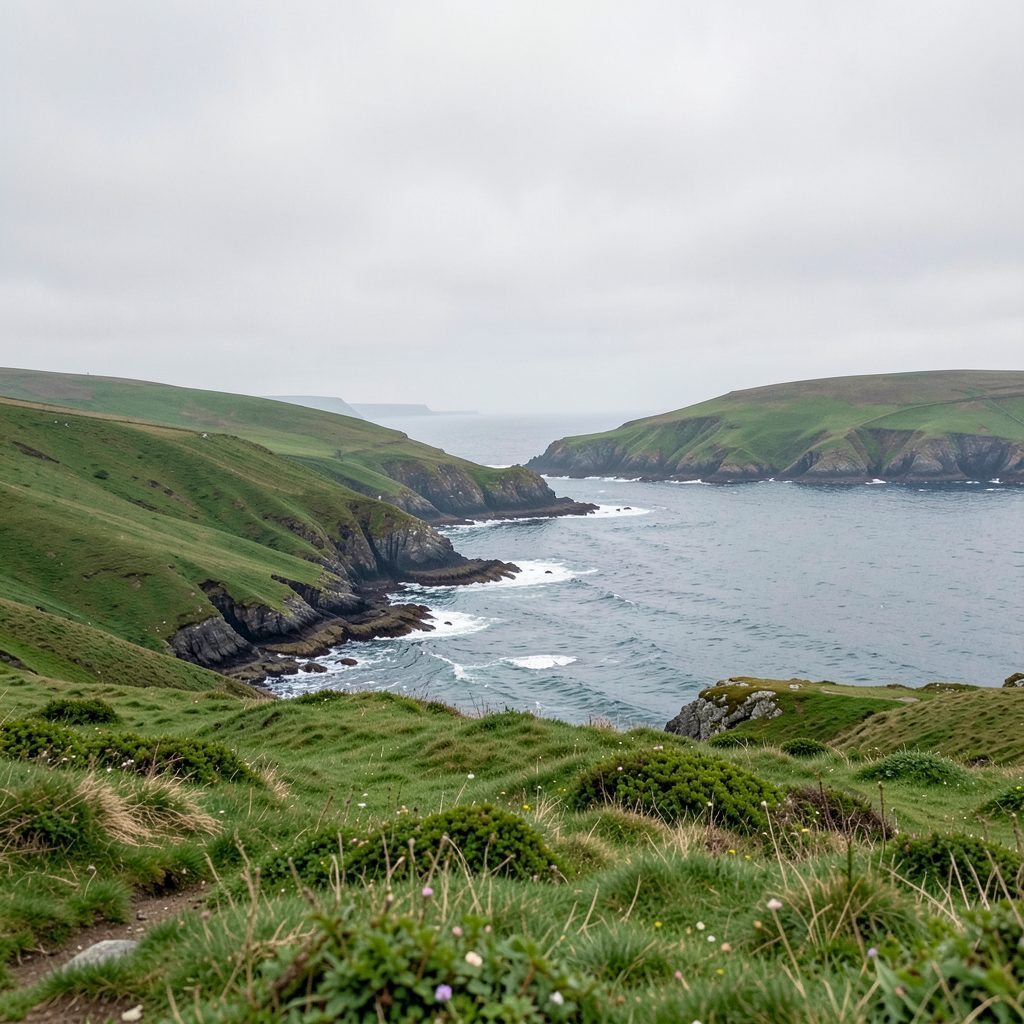
Talking About Your Hobbies in Cornish
Cornwall's language is alive again, spoken at festivals, in classrooms and across kitchen tables from Penzance to Perth. Hobbies offer a warm way into any tongue: they reveal what you love, invite questions back, and open conversations that travel far beyond grammar drills. Whether you collect shells, paddle a kayak or tend a vegie patch, Cornish gives you a friendly set of words to share it.
Australia holds a special place in the Cornish story. Miners from Redruth and Camborne settled the copper triangle around Moonta, Kadina and Wallaroo in the nineteenth century, and their descendants still gather for the Kernewek Lowender festival each May. Today, learners in Adelaide, Hobart and Brisbane carry the language forward through choirs, surfing clubs and bushwalking groups, proving that hobbies can be a doorway to heritage on either side of the Indian Ocean.
The aim here is practical. You will pick up the core nouns, the verbs that move them and the small question phrases that turn a hobby into a chat. Nothing heavy, nothing clinical, just enough Cornish to talk about what you actually do on a Sunday afternoon.
Core words for leisure and play
Cornish groups its hobby words into familiar Celtic patterns, and most learners can hold a basic exchange after learning a handful of high-frequency nouns. The table below gathers the ones you will reach for most often, with a sense of when each is useful.
| Cornish | English meaning | Typical sentence starter |
|---|---|---|
| gwithyas | hobby, pastime | An gwithyas a garaf... |
| cware | game, play | War an cware ma... |
| lyes | leisure | Drefen an lyes... |
| kan | song | Lowenhe genam gan... |
| dons | dance | An dons a gar... |
| pesk | fish | Mos dhe besk... |
| dyskans | lesson, practice | Yn ow dyskans... |
A second cluster covers the activities themselves: surfya (to surf), skianklya (to skate), peskessa (to fish), lowenhe (to enjoy oneself) and kan (to sing). You will hear these at festivals in Glen Innes as easily as in Redruth, because Cornish speakers have always borrowed freely when a foreign activity arrived. Bungee jumpya and skateboardya follow the same pattern.
Keep a small notebook when you read a Cornish phrasebook or hear a song lyric. Jot down any hobby noun that surprises you; your list will grow faster than any textbook.
Verbs that put you in the action
Nouns name the thing, but verbs make the sentence move. Cornish relies on a small set of patterns: car (to love), gwari (to play), gwrye (to do, to make), dysk (to learn) and lowenhe (to rejoice, to enjoy). The verb car is the engine of hobby talk. My a gar gan (I love singing) and my a gar surfa (I love surfing) sound natural from the first week of study.
The verb gwari covers playing, while gwrye handles the general "I do". Lowenhe a wrav dhe weles (I enjoy seeing it) is a friendly phrase to keep on hand. Dysk appears in combinations like dysk kan (to learn song) and dysk liniennau nowydh (to learn new lines), and it doubles as a noun for a lesson, which means the same word serves your conversation about classes.
Practise by pairing one verb with one hobby noun every day. Monday might be car + peskessa, and you can imagine standing on a pier at Williamstown in Victoria, telling a fellow angler what you like. The brain stores the pair as a single chunk, and conversation flows more easily than if you memorise isolated words.
Questions to ask someone else
Hobby talk is two-way. The most useful question is Pandr'a wryth'ta lowenhe? (What do you enjoy doing?). A simpler version, Pyth a wryth'ta? (What do you do?), works in almost any casual moment. To ask about pastimes directly, A gari gan? (Do you like singing?) or A gari surfa? (Do you like surfing?) opens doors quickly.
If you want to ask how often, try Pyth termyn yth wryth'ta an pyth ma?, a longer phrase but worth memorising because it earns trust. To invite someone along, A wrenni dos genam? (Would you come with me?) is polite and direct. Australians who holiday on the Tasmanian coast often meet Cornish speakers at gatherings such as the Cygnet Folk Festival, where these exchanges come in handy over a flat white.
Listen to how people answer you and mirror their structure. If someone says car gan genev, you can reply ha genev yw lowenhe gans kan ynwedh (and I also find singing joyful). Cornish tolerates a friendly echo, and it builds confidence on both sides of the conversation.
Time and frequency expressions
How often you do something shapes every hobby conversation. Cornish uses pyth eur (what time) and pyth termyn (what period) for when, and pub (every) for frequency. Pub Sadorn means every Saturday, useful for cricket lovers at the MCG. Pub seythen covers every week, pub mis every month and pub bledhen every year.
A few common adverbs soften or sharpen the routine. Redom (often), anweyth (sometimes), nebes (a little) and lowr (enough) all appear in everyday speech. Saying nebes a weyth yth eson lowenhe (sometimes we are happy) feels natural once you hear it a few times.
If your hobby has seasons, learn the months in Cornish: Genver (January), Meurth (March), Ebrel (April), Metheven (June), Gortheren (September), Hedra (October) and Du (December). Combining month and activity, surfya in Metheven (surfing in June, when southern swells hit Bondi), gives your speech a distinctive Celtic flavour even when the topic is thoroughly Australian.
Hobbies that suit Australian life
Some Cornish hobby words pair unusually well with Australian pastimes. Surfya fits the swell lines along the Great Ocean Road. Peskessa suits weekend trips to Mallacoota or Streaky Bay. Helergh (a hunt) and huntya (to hunt) match the bushwalking and feral-animal management traditions of Tasmania's high country.
Gwari crikyt (to play cricket) needs no translation at a summer match at Adelaide Oval. For football lovers, gwari pel dro covers soccer, while gwari ballys is used for the Australian game. Vegemite stays the same, but Cornish speakers happily say debry marmite war an treth (eating marmite on the beach) to mean a coastal breakfast.
Music is where the two cultures overlap most. Kan (song), gwerin (folk) and dons (dance) appear at folk festivals in Cygnet and at Cornish gatherings in Burra. If you play an instrument, learn the Cornish word for it: delin (violin), kitar (guitar), fliut (flute), organ (organ). You will then find conversation partners at almost any Australian Celtic festival you wander into.
Practical ways to keep practising
Daily exposure turns vocabulary into speech. The suggestions below fit easily into a working week, even for busy learners in Sydney or Perth.
- Spend ten minutes each morning with the Cornish phrasebook, reading one hobby phrase aloud and using it before lunch.
- Record a short voice memo each evening describing what you did that day in Cornish, then replay it on your commute.
- Join an online Cornish session once a week; several are timed to suit AEST and AEDT, and tutors welcome beginners.
- Trade hobby tips with a fellow learner in a chat group, mixing English and Cornish as you go.
- Visit a Cornish heritage site such as Moonta Mines or attend the Kernewek Lowender at least once a year; immersion, even briefly, resets your ear.
The last suggestion matters most. Languages live when speakers use them for things they care about. Pick one hobby you genuinely love, learn the Cornish vocabulary for it, and find someone to chat with about it online, in a class or at a festival. The repetition you build around your passion will carry the rest of the language with it.
Try recording one minute of Cornish today, even if it is only naming the hobbies you enjoy. Play it back, correct what you can, and share the clip with a tutor or a friend who is learning beside you. That single minute is the seed of every conversation you will later hold in Cornish.
Stay connected with the Cornish language community.