
Discover the Cornish Language
An online resource for anyone interested in learning Cornish. Explore our phrasebook, vocabulary guides, FAQs, and a comprehensive directory of learning resources — from books and dictionaries to online courses and organisations.
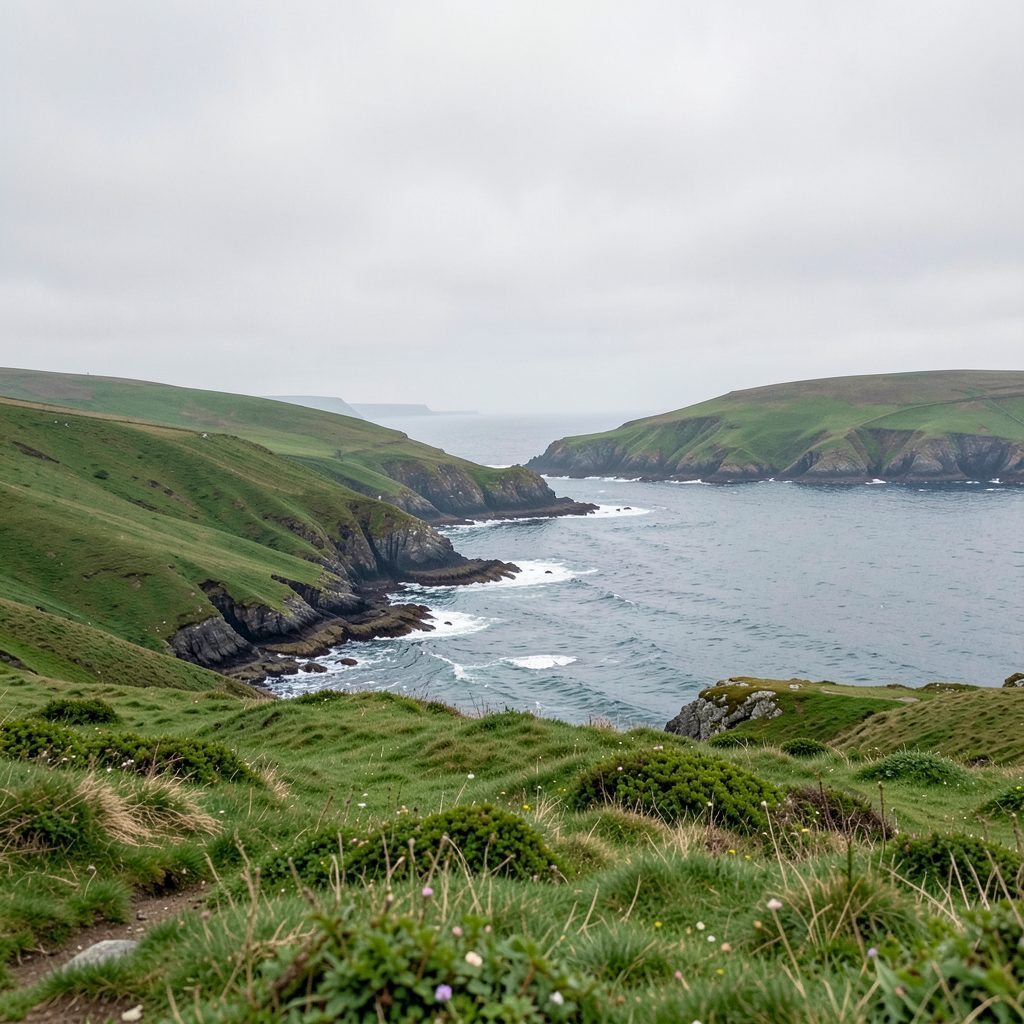
Speaking your day in Cornish: a practical guide
When you begin learning Cornish, you quickly discover that one of the most useful things you can do is talk about your own day. Describing your morning, your work, your meals, and your evening gives you a frame to practise dozens of everyday words and phrases at once. It also makes the language feel personal, because the sentences are about your life rather than abstract textbook examples.
Cornish, or Kernewek, belongs to the Brythonic branch of Celtic languages. It was once thought to have declined as a spoken tongue in the late eighteenth century, but thanks to revival movements it now enjoys a growing community of learners and speakers. Many people come to it because they want a deeper connection with the landscape, folklore, and music of Cornwall, while others pick it up purely as a linguistic challenge alongside Welsh or Breton.
Routines work well for language practice because they are predictable. You wake up, get dressed, travel somewhere, eat, work, and rest. That predictability means you can build small sentences from the same set of verbs and nouns every single day, slowly turning them into habits. Once those habits stick, the Cornish version of your day starts to feel as natural as the English one.
Learners in Australia often find that mixing Cornish with their own surroundings makes the process more enjoyable. Whether you are catching a train through the Sydney CBD, queuing for a flat white in a Fitzroy café, or driving across the Nullarbor on a long shift, you have plenty of material for sentences. The trick is to pick a few moments in your typical day and rewrite them in Cornish, even if only in your head.
Waking up and morning phrases
The first hours of the day offer a dense cluster of useful vocabulary. In Cornish, "good morning" is "myttin da," and you can greet people with "dydh da" at any point until dusk. You will want to know how to say that you have just woken up, that you are washing, dressing, or having breakfast. The verb "dibreh" means to wake, while "golghi" covers washing, and "gwiska" is for getting dressed.
Breakfast itself opens a small but rich area of vocabulary. "Bôr" covers the morning meal in many dialects, and you can pair it with words for tea ("di") or coffee. If you are an early riser who prefers a quieter morning routine, the Cornish words for stillness and solitude appear regularly in traditional literature, which is a pleasant way to anchor your learning in the language's poetic roots.
A useful pattern is to begin with the time, then add the activity, then close with how you feel. This rhythm lets you carry a lot of meaning in just a few words. Practising your own version of this pattern each morning helps you remember the cadence of the language without sitting down with flashcards.
Here are a few phrases to try during your first hour of the day:
- "Dydh da" – good day (used as a greeting during daylight hours)
- "My a wolgh" – I wash
- "My a wysk" – I dress
- "Bons dhe'n jydh" – I am going to work
Travelling and getting around
Australian commuters often have long stretches of time on public transport, whether they are on the Melbourne tram network, the Sydney train system, or one of the long-distance coaches that cross the country. That time is ideal for rehearsing Cornish phrases because you can say them quietly without disturbing other passengers.
The verbs you will use most often involve movement. "Mos" means to go, "doth" is to come, "rena" is to run, and "kerth" covers walking. You can combine these with places and times of day to build full sentences, describing your commute from Parramatta to the harbour, or from the Brisbane valley out to the coast. Each route you take is a new opportunity to slot Cornish vocabulary into a familiar journey.
If you drive to work, you can describe the road itself using words like "fordh" for road and "kerthi" for a journey. Many learners find it helpful to narrate their trip out loud, almost like a commentary. This works particularly well on a quiet rural highway where you are alone with your thoughts and can speak at a relaxed pace without feeling self-conscious.
Time words matter as much as movement words when travelling. "Lemmyn" means now, "a-ji" is later, and "a-ban" covers soon. Slotting these into your commute narration helps you build longer, more natural sentences that feel less like a list and more like a real conversation.
Work, study and daytime activities
Once you arrive at your workplace or study location, a different set of verbs comes into play. "Gober" is work in the noun sense, while "goweth" and "dyski" relate to learning and teaching. If you are based in an office in Perth or Adelaide, you can practise describing tasks such as answering emails, attending meetings, or writing reports, all in Cornish.
Time expressions matter a great deal here. You will need the days of the week (Lun, Meurth, Merher, Yow, Gwener, Sadorn, Sul) as well as months and seasons. Saying "an jydh Merher, esof vy owth ober" lets you say that you were working on Wednesday, and that single sentence carries a useful piece of grammar that you can adapt to any weekday.
Many Australians balance work with study, side projects, or family commitments, which gives you plenty of raw material. You can describe dropping children at school in Hobart, attending a yoga class in Fremantle, or finishing a shift at a Darwin hospital. The more specific the description, the more memorable the Cornish vocabulary becomes, because it ties to a real moment in your life rather than an imagined scenario.
Meals, coffee and social moments
Food and drink conversations are some of the easiest entry points into Cornish because the words are short and you use them every day. "Kig" is meat, "bara" is bread, "frut" covers fruit, and "dowr" means water. Lunch in Cornish is "mérer", while dinner is "soper", and snacks can be described using the general word "byw". A learner in Melbourne's café scene, for instance, can describe a flat white as a familiar ritual while naming each step in Cornish.
Coffee culture in Australia is famously strong, so it is worth spending a little extra time on this area. If you want to know how to ask for your usual order at a Cornish-themed event or simply enjoy learning the vocabulary in a relaxed setting, the guide to ordering coffee in Cornish walks through the key phrases. Reading it before your next café visit, even a non-Cornish one, is a pleasant way to keep the language in your ear.
Dinner conversations with housemates or family are a low-pressure environment in which to practise. You can simply say the Cornish word for each dish as it is passed around, or attempt a full sentence such as asking whether anyone wants more bread. These small efforts add up over weeks and months without anyone around you needing to understand the language at all.
A few sentence starters that work at any meal:
- "An myttin ma, my a..." – This morning, I...
- "Wosa mérér, my a brên..." – After lunch, I want to...
- "An nos, esof vy ow..." – Tonight, I was...
- "Lemmyn, my a wra..." – Now, I am doing...
Evening wind-down and sleep
As the day closes, the verbs shift towards rest and reflection. "Kodha" means to sleep, "diweth" covers the end, and "gorthuher" is to rest. Saying "an nos, my a brên kodha" lets you express that you want to sleep tonight, which is a useful phrase to know on long shifts.
Many Australians spend their evenings watching sport, reading, scrolling through their phones, or enjoying a quiet card game. Some learners like to think through their hand carefully, and if you sometimes play, the breakdown of optimal bet calculations shows how structured thinking shapes small decisions, which mirrors the way you weigh vocabulary choices when building a sentence. Each of these activities can be turned into a Cornish sentence.
The verb "redya" means to read, "gweles" is to see or watch, and "kows" covers talking. You might describe a quiet night in Adelaide as "an nos, esof vy ow redya lyver", meaning that you were reading a book. A short evening routine of repeating your day in Cornish is one of the most effective study methods you can adopt, because the same vocabulary you practised in the morning will feel familiar by this point.
If you travel across Australia's time zones, you might notice that the timing of your routine shifts depending on whether you are in Western Australia, South Australia, or the eastern states. That variation can actually help you remember the Cornish words for "early," "late," "now," and "soon," because each new location forces you to renegotiate your schedule.
Tomorrow morning, choose three moments from your real day and write one Cornish sentence for each before you leave the house.
Stay connected with the Cornish language community.