Discover the Cornish Language
An online resource for anyone interested in learning Cornish. Explore our phrasebook, vocabulary guides, FAQs, and a comprehensive directory of learning resources — from books and dictionaries to online courses and organisations.
Cornish words for colours and how to use them in real speech
Few things travel as freely as colour. From the red centre around Alice Springs to the turquoise shallows off Cairns, Australians already speak fluently about rust, eucalyptus green, ochre, and ocean blue. Adding Cornish colour words to that vocabulary opens a small door into another corner of Europe, where Celtic seafarers once used their own vivid terms for sky, stone, and sea.
Across Hobart, Brisbane, and the inner suburbs of Adelaide, heritage language groups are quietly forming. Some learners are drawn to Cornish because of family links to nineteenth-century tin-mining emigrants, while others simply want a Celtic tongue that is enjoying a strong revival. Whatever the reason, colour is often the first topic tackled, because the words appear everywhere from folk songs to street signs in Truro and Penzance.
Cornish belongs to the Brythonic branch of the Celtic family, sitting alongside Welsh and Breton. Its modern written form was largely shaped during the revival movement of the early twentieth century, drawing on texts like the Ordinalia and the work of scholars such as Edward Jenner and Robert Morton Nance. Colour terms in the language often carry older, layered meanings that go beyond the simple visual reference English speakers expect.
This article walks through the main Cornish colour words, explains how they behave in a sentence, and gives a few practical phrases you can try straight away. Along the way, there are notes on regional spelling variations, comparisons with English, and a short list of ready-made expressions for everyday use.
The shape of Cornish colour vocabulary
Like many Celtic languages, Cornish colour adjectives usually come before the noun they describe. So "white moon" becomes "an loer gwyn", literally "the white moon". Modern Cornish also drops the grammatical gender that used to mark adjectives in Old Cornish, which makes colour words refreshingly simple to slot into a sentence.
Pronunciation is the next thing to settle. Most colour terms follow regular sound patterns, with a strong stress on the first syllable and short vowels throughout. The letter combination "gh" is silent in many dialects, while "dh" sounds like the "th" in "this". Practising with a phrasebook from the Learn Cornish main page helps lock these habits in.
One important point is that a few colour words cover broader territory than their English equivalents. The famous example is "glas", which can mean blue, green, or even grey depending on context, much like Welsh "glas". This wider meaning gives Cornish a poetic edge when describing weather, water, or plant life, and it reflects an older Celtic sense that certain shades blur into one another.
Names for the primary colours
The core set of Cornish colour adjectives covers what most learners need for everyday conversation. These words are short, memorable, and appear in almost every beginner textbook.
The most common primary terms are gwyn for white, du for black, rudh for red, and las for blue. Green is often given as gwer in revival texts, though the older word glas can cover blue and green together. Yellow tends to appear as melyn, which also carries a honey-coloured sense in older poetry.
These words show up in phrases like "an loer gwyn" for snow under moonlight on the Brindabella ranges, or "an ki du" for a dark-coated kelpie on a Riverina property. Australians often find these short forms easier to remember than longer English synonyms, which is part of the appeal of picking up a smaller Celtic language as a hobby.
Secondary and earthy shades
Once the primary colours feel familiar, the next step is the secondary palette. Cornish has a generous range of words for the softer hues that suit landscape, craft, and clothing.
Melyn covers yellow and gold, while glesin or gorrys handles purple shades. Or is the word for gold itself, used both as a colour and as the metal, much like English. Brown has several forms, with lorj and kastan being common, both linked to chestnut tones. Pink often appears as roz or pinc, depending on whether a Celtic root or a borrowed term is preferred.
These earthy words come in handy when describing Australian bush colours. A sunset over the Pilbara could be called "rudh" or "melyn", and the bark of a jarrah tree might match "kastan". Learners at workshops in Fremantle or Newtown often use these practical links to cement vocabulary that would otherwise stay stuck in a textbook.
Colours that mirror the Cornish coast and moors
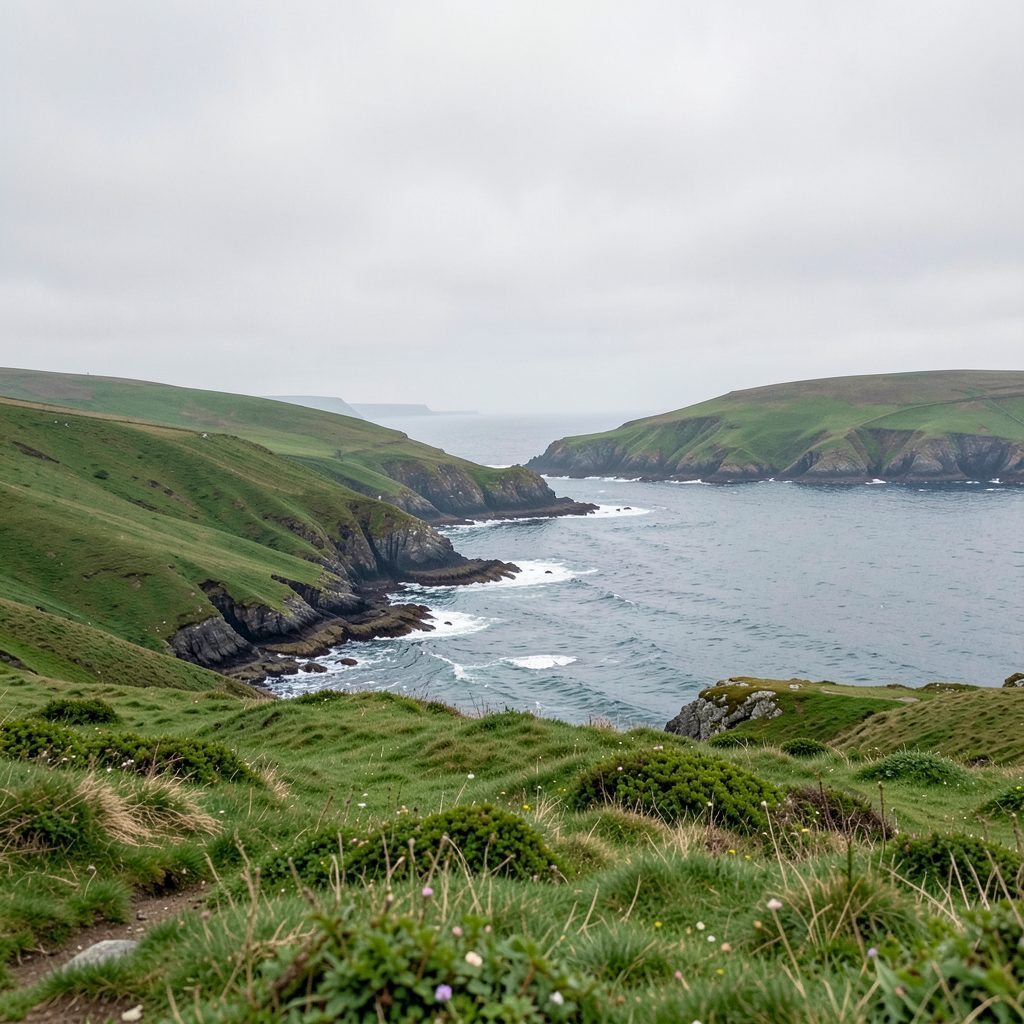
Cornwall itself inspired many of these colour terms. The cliffs around Land's End are often described as "glas" or "gwer", echoing the grey-green of slate and sea. Heather on Bodmin Moor tends to be called "purpur" or "glesin" in modern Cornish poetry, especially in texts influenced by the Gorseth circle.
Australians visiting Cornish heritage sites often notice how the landscape vocabulary feels familiar. The blue-green water near Sydney Heads behaves like "glas", while the pale sand of Wineglass Bay has the same quality as Cornish shell beaches. Travellers familiar with the rugged coast of Cornwall often bring back colour terms that fit their own surroundings back home.
Compounds that pair colour with another noun are common in folk songs and offer a useful pattern for learners who want to expand beyond single-word adjectives. The combination "glas-mor" (blue-green sea) is one example that travels well to Australian shores.
Putting colour words into everyday Cornish phrases
A useful first pattern is colour adjective plus noun. For example, "ki gwyn" means white dog, "an loer gwyn" refers to a white moon, and "ros rudh" means red moor. These compact forms sit well in songs, signs, and short descriptions.
Another common pattern uses the verb "bos" (to be) to describe something. "An loer yw gwyn" means "the moon is white". This structure is handy when chatting about the weather, the sky, or a piece of clothing. It also translates neatly into Australian small talk about the weather, which is a popular topic in Perth and Darwin.
Borrowed words fill in the gaps for modern objects. English loanwords like "oranj" (orange) and "pinc" (pink) are used freely. Learners should feel comfortable mixing native and borrowed terms, as revival speakers across Hobart and Geelong do in their weekly conversation circles.
Regional and historical colour terms
Like Australian English itself, modern Cornish has several competing spelling standards. Kernewek Kemmyn, Kernewek Nowedga, and the Standard Written Form all use slightly different colour terms. For example, "yellow" appears as melyn, melen, or even gelin in older poetry, depending on the source.
Historical Cornish colour vocabulary is richer than the modern set. Medieval texts list "glas" for silver and grey-blue, "bouk" for pale, and "screk" for a vivid red. These words show up in place names such as "Boconnoc" and other historical sites, offering a window into how medieval Cornish speakers saw their world.
For Australian learners, this regional variation can feel familiar. Someone moving between Cairns and Melbourne notices similar shifts in dialect, slang, and accent. Embracing that variety rather than insisting on one spelling system makes the learning process smoother and more enjoyable.
Useful phrase patterns for everyday colour talk
A small set of patterns covers most situations, from describing the sky to picking out a favourite jumper. Practising four or five sentences each day keeps the vocabulary fresh and ready for conversation.
Common colour phrases to practise:
- An loer yw gwyn (the moon is white)
- An mor yw glas (the sea is blue-green)
- An gwydh yw gwer (the tree is green)
- An howl yw melyn (the sun is yellow)
Quick references for learners:
- Colour words usually come before the noun
- Most adjectives have one short form and drop extra endings
- Borrowed words such as oranj and pinc work alongside native terms
- Verb patterns with "bos" (to be) are the simplest way to link colour and noun
| English | Cornish (SWF) | Cornish (Kernewek Kemmyn) | Example phrase |
|---|---|---|---|
| white | gwyn | gwynn | an loer gwyn (the white moon) |
| black | du | du | an ki du (the black dog) |
| red | rudh | rudh | an ros rudh (the red moor) |
| blue | las | glas | an mor las (the blue sea) |
| green | gwer | gwer | an gwydh gwer (the green tree) |
| yellow | melyn | melen | an howl melyn (the yellow sun) |
| purple | glesin | glesin | an bleujen glesin (the purple flower) |
| brown | lorj | lorj | an prenn lorj (the brown branch) |
The next step is to try these words in real conversation. Drop into a beginner session at a community centre, or reach out through the contact page to ask about local classes and online conversation circles. One short message today could lead to a first full Cornish exchange by the end of the week.
Stay connected with the Cornish language community.