Discover the Cornish Language
An online resource for anyone interested in learning Cornish. Explore our phrasebook, vocabulary guides, FAQs, and a comprehensive directory of learning resources — from books and dictionaries to online courses and organisations.
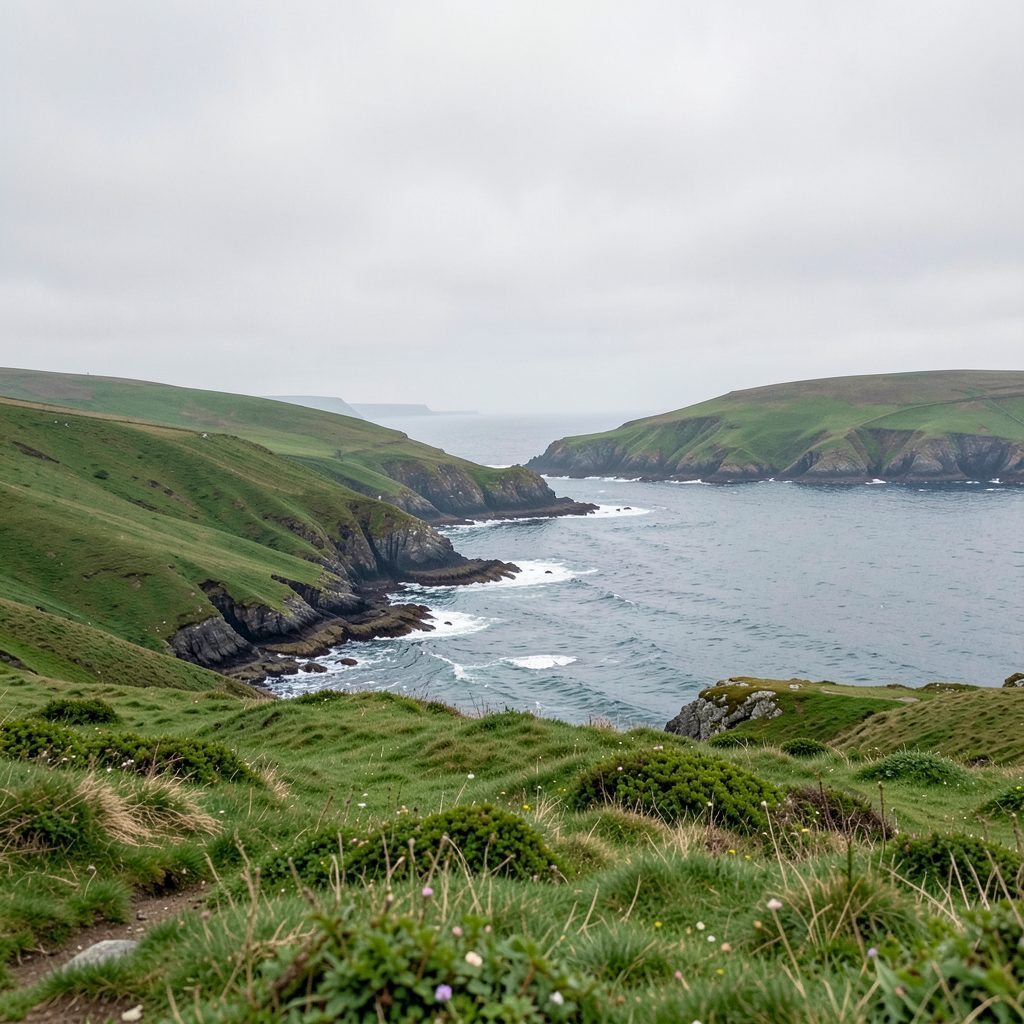
Reading the Stories Hidden in Cornish Place Names
Cornish place names are compact records of landscape, belief, work and settlement. A single word can point to a hill, a cove, a church, a stream or an ancient community. Many names have been written in English forms for centuries, yet their older Cornish elements still describe the country clearly.
For learners, these names offer a practical way into the language. Rather than memorising isolated vocabulary, you can see how words combine and recur across Cornwall. Once pen is recognised as a headland or end, and tre as a settlement, a map begins to look like a collection of useful language clues.
This is especially appealing in Australia, where people are accustomed to asking what a place name means. Names such as Wagga Wagga, Parramatta and Woolloongabba invite curiosity about language and Country, while Cornish names open a different window onto Celtic history. The two traditions should not be confused, but both show how geography and language remain closely connected.
Why Cornish names preserve history
Cornish belongs to the Brythonic branch of the Celtic languages, alongside Welsh and Breton. It was spoken throughout much of Cornwall before English gradually became dominant. Although daily use declined, names on maps, road signs and parish records kept many Cornish words alive.
A place name may preserve an older description even after the landscape has changed. A “wood” may have been cleared, a mine may have closed, or a river may have altered its course, while the name remains. This makes local names valuable evidence for historians, genealogists, walkers and language students.
Spelling can vary because names passed through several languages and writing systems. English officials, mapmakers and parish clerks often recorded what they heard, which produced forms that do not always match modern Cornish spelling. Some names also have several suggested explanations, so a careful source will distinguish established meaning from attractive speculation.
The building blocks found on the map
Several recurring elements are particularly helpful. Pen means a head, end or headland, and appears in Penzance, whose Cornish form is commonly understood as Pennsans, “holy headland”. Tre refers to a settlement or homestead and can be seen in names such as Truro, though the exact history of individual names requires care.
Pol is associated with a pool, pond or inlet. Polperro is often explained through elements referring to a pool and a person or saint, while Polzeath contains a form connected with a fortified place. Nans means a valley, as in Nansledan, a modern development near Newquay whose name deliberately draws on Cornish vocabulary.
Other useful elements include men for stone, ros for heath or promontory, bod for dwelling, and lan for a church enclosure or sacred place. These are not mechanical translation pieces that can explain every name perfectly, but they provide strong starting points when comparing villages, farms and coastal features.
Coast, rivers and the shape of the land
Cornwall’s coastline is particularly rich in descriptive names. St Ives is known in Cornish as Porth Ia, meaning the harbour or cove associated with Saint Ia. Falmouth has an English name linked with the River Fal, while its Cornish name, Aberfal, refers to the river mouth or estuary. The contrast shows how English and Cornish naming traditions can sit beside each other.
Redruth is connected with a Cornish form often interpreted as “red ford”, reflecting rudh, red, and a word associated with a crossing. Camborne comes from a name commonly linked to a crooked or bent hill. In a mining district, such names sit alongside later English terminology connected with engines, shafts and industrial works.
The landscape vocabulary also helps explain why similar elements appear across Cornwall. A porth is a harbour or cove, aber concerns a river mouth, and nans describes a valley. Australian learners may find this familiar from reading names in very different environments: a place can be named for a bend, waterway, ridge or crossing, then retain that description as the settlement grows.
Saints, churches and older communities
Christianity left a deep mark on Cornish geography. The element lan often indicates an enclosed church site or settlement associated with a saint. Lanhydrock, Landewednack and Lanivet are examples of names where the church foundation is central to local identity. The saint’s name may be difficult to recognise because it has been altered by centuries of pronunciation and spelling.
St Austell is associated with Saint Austol, while Padstow comes from Petroc-stow, the settlement of Saint Petroc. These names do more than identify a town. They point to the network of monasteries, chapels, pilgrimage routes and local communities that shaped Cornwall during the early medieval period.
Names beginning with bos or bod may refer to a dwelling or estate, while caer can indicate a fort or fortified place. Tintagel is famous for its medieval and legendary associations, but its name is also a reminder that place-name interpretation should be based on linguistic evidence rather than later stories alone. Popular tradition can enrich a site without necessarily explaining its original name.
English forms, Cornish revival and modern use
Many familiar names are Anglicised versions of older Cornish names. Newquay, for example, is an English name that replaced the older Cornish Towan Blystra in common use. Mousehole is a vivid English rendering, while the Cornish name Porthenys belongs to a different naming tradition. Such pairs show that translation is not always a matter of replacing one word with another.
The revival of Cornish has encouraged renewed interest in traditional forms, bilingual signage and accurate pronunciation. Modern speakers, local councils and cultural organisations may choose a Cornish form for educational, ceremonial or identity-based reasons. The result is a living conversation about which spelling, dialect form or historical version best suits a particular place.
Learners can follow that conversation through language resources and Cornish language news, where cultural events and developments provide context beyond vocabulary lists. Hearing names used by speakers is especially useful because written forms alone do not reveal stress, mutation or regional pronunciation.
Australian students may encounter this through online classes rather than local institutions. Cornish associations and family-history groups exist in places such as South Australia, Victoria and Tasmania, reflecting migration from Cornwall during mining and industrial expansion. A learner in Ballarat or Bendigo may therefore meet Cornish heritage through a community event, a surname, a mining connection or a digital course.
A practical way to read a Cornish map
A good method is to begin with the visible geography, then test possible word elements against reliable references. If a name contains porth, look for a harbour or cove. If it includes pen, consider a headland, hill or geographical end. Do not force a translation when the landscape or historical record does not support it.
It is also worth comparing the modern English form with the standard written Cornish form, while remembering that historical spellings may differ. The following examples are useful study prompts rather than complete dictionary definitions.
| Cornish element or name | Common meaning or association | Example |
|---|---|---|
| pen | head, end or headland | Penzance |
| tre | settlement or homestead | Truro |
| pol | pool, pond or inlet | Polperro |
| lan | church enclosure or sacred settlement | Lanivet |
| nans | valley | Nansledan |
| porth | harbour or cove | Porthleven |
| aber | river mouth or estuary | Aberfal, the Cornish name for Falmouth |
| men | stone | Men-an-Tol |
Digital study can make this process more memorable when vocabulary is attached to a small task: label a map, group names by element, or make flashcards from local examples. Even an unrelated card-game guide illustrates how a specialised set of terms can become easier to understand when organised into short, repeated patterns; the same principle works for Cornish geography.
Useful habits for Australian learners include:
- Keep a personal map of Cornish places and add one likely meaning to each name.
- Check whether a translation is modern, historical, legendary or uncertain.
- Listen to recorded Cornish pronunciation instead of relying only on English spelling.
- Compare related elements across coastal towns, inland villages and mining districts.
- Learn the cultural history attached to a name, not just its literal gloss.
Cornish place names are best understood as layers rather than fixed labels. They contain landscape descriptions, saintly associations, settlement history, industrial memory and the marks of language change. What a learner should remember is that every recurring element offers a clue, while the full meaning emerges from geography, history and the people who continue to use the name.
Stay connected with the Cornish language community.