Discover the Cornish Language
An online resource for anyone interested in learning Cornish. Explore our phrasebook, vocabulary guides, FAQs, and a comprehensive directory of learning resources — from books and dictionaries to online courses and organisations.
Walking Cornwall with Cornish Phrases: a Hiker's Primer
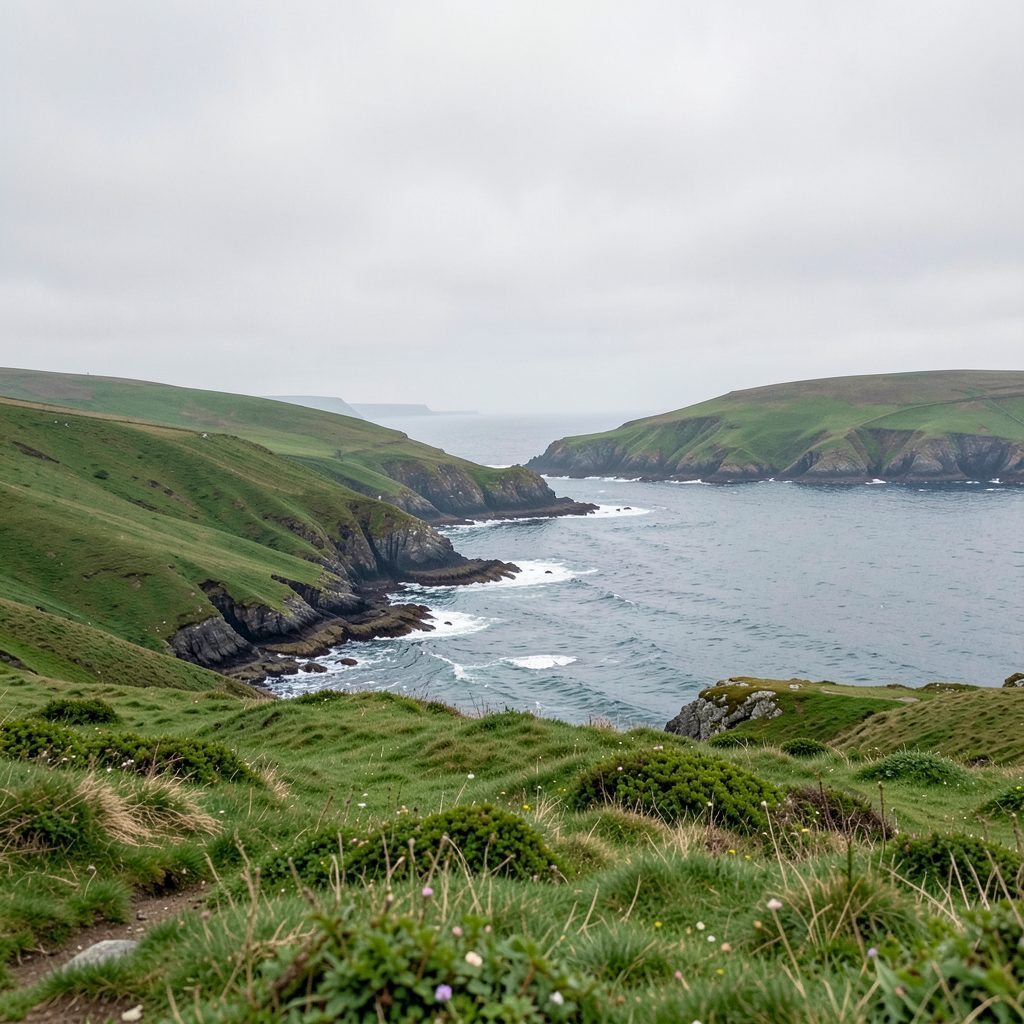
Cornwall's cliff paths, woodland valleys and moorland reservoirs have drawn walkers from every continent for decades, and Australian travellers are a growing presence on these routes. A quiet confidence with local language turns a simple coastal stroll into something richer, especially when a friendly local greets you at a farm gate or a café in St Ives. Picking up a few words of Kernowek — the revived name for Cornish — adds texture to every conversation along the South West Coast Path.
Many Australians already know the rhythm of long-distance walking from tracks like the Overland Track in Tasmania or the Larapinta through the Northern Territory, so the physical challenge rarely surprises them. What does surprise travellers from Melbourne, Brisbane or Perth is how much a small Cornish vocabulary can change their experience. A polite "Dydh da" at a B&B opens conversations that a tourist map never could, and even rough attempts at pronunciation are warmly received in villages like Mousehole, Porthcurno and Zennor.
This primer focuses on the practical side of the language for walkers, covering greetings, weather talk, counting, trail signs and post-walk refreshments. Each section keeps things simple and aims to give readers phrases they can use on real trails. Cornish is a living revival, not a museum exhibit, and using it on foot is part of that revival in the most natural way possible.
Meeting people: greetings and trail politeness
For Australian walkers used to bushwalking clubs where greetings are casual and direct, Cornish social norms might feel surprisingly gentle. The standard greeting "Dydh da" (pronounced roughly "dee-tha") means good day and works in almost any situation on the trail. In the evening, "Nos da" (good night) is equally common, and after a long day's walk a tired "Yma genen lowena" (we are happy) earns appreciative smiles in coastal pubs.
Etiquette matters more on Cornwall's narrow footpaths than many visitors expect. Single-file walking on cliff edges, stepping aside for faster hikers and closing gates behind you are all standard practice, much like the Leave No Trace principles Australian walkers apply on tracks like the Six Foot Track in the Blue Mountains. Saying "Gorra triga" (sorry, excuse me) when squeezing past a group on a stile is appreciated, and "Gans a ger" (please) softens any request, including directions from farmers whose fields cross your path.
A handful of small phrases go a long way. Learning "Plegyak lowen yw genen" (we are very pleased to meet you) for moments when you stop at a farm shop near Penzance, or "A gan daswel" (until we meet again) when parting ways with fellow walkers, gives a respectful rhythm to the trip. Australians are known for friendliness abroad, and a Cornish greeting doubles that warmth in a way locals remember.
Weather, seasons and trail talk
Weather shapes every walking day in Cornwall, and Cornish weather vocabulary is genuinely useful. "Glaw" means rain, "howl" is sun, and "gwyns" is wind — three words that appear in casual conversation constantly. Locals often combine them: "Glaw ha gwyns" (rain and wind) describes a typical Atlantic front rolling in off the Celtic Sea, and walkers who recognise the phrase while huddled behind a granite hedge earn immediate respect from passing dog-walkers.
Australians should expect Cornish weather patterns to feel strangely familiar yet distinctly different. The maritime climate in places like Porthleven is mild and wet rather than extreme, much closer to a Hobart summer than the dry heat of a Perth weekend. The southern hemisphere instinct to read a sky for cold fronts or sea breezes translates well, but the soft Cornish drizzle, sometimes called "mizzle," has no real Australian equivalent. Knowing how to ask "An gewer yw glaw?" (Is the weather rain?) at a tea room keeps the conversation moving.
Trail talk also includes practical terms worth memorising. "Fordon" (path or road) and "fordh" (way or route) both appear on old signposts and in conversation. Asking "Pandr'yw an fordh dhe Land's End?" (What is the way to Land's End?) on a misty afternoon near Sennen Cove is far more useful than fumbling with a paper map. Carrying a phrasebook resource for quick reference makes all of this easier when the wind picks up and gloves come out.
Counting distances, steps and time
Distance and time on a long walk require numbers, and Cornish numbers feel intuitive once the pattern clicks. From one to ten, the sequence runs: onen, dew, tri, peder, pymp, hwegh, seyth, eth, naw, deg. Australian walkers will recognise the familiar Celtic cousins of tri, peder and pymp, which echo Latin roots found in several European languages. The teens and twenties follow predictable patterns, with "deg" (ten) and "ugens" (twenty) carrying through the rest of the system.
Numbers become essential when ordering meals, asking about distances or counting fellow hikers on a narrow coastal stretch. Asking "Pell yw an fordh?" (How far is the way?) and hearing the response in miles rather than kilometres takes some adjustment for visitors from Melbourne used to measuring runs along the Tan track. A quick review of a Cornish numbers guide before departure helps with everything from bus tickets out of Penzance to splitting a Cornish pasty bill at a walkers' café in Porthtowan.
The Cornish word for hundred is "kans," and counting higher numbers follows the vigesimal pattern once used in several Celtic languages. While walkers rarely need numbers above twenty on a daily hike, knowing how to read older place names that reference distance — such as "mil" (thousand) in some historic field names — adds depth to map reading. Practice makes this easier, and a dedicated guide to counting in Cornish is worth reading on the long flight over.
Place names, signs and pronunciation tips
Cornish place names are among the most striking features of the landscape, and many Australian walkers are surprised to learn how much of the old language survives in everyday signage. "Tre" means homestead, "pen" means headland, "pol" means pool, and "logh" means lake. Penzance combines "pen" and "sans" (holy headland), while Polperro takes "pol" and "per" (pool of the pier). Reading place names becomes a quiet hobby on a multi-day coast path walk.
Pronunciation is where most learners stumble, particularly with the rolled "r" and the soft "dh" sound. In Australian English, the harder "d" tends to dominate, but softening produces something closer to a Cornish "dh" — think of the gentle "th" in "the" voiced rather than unvoiced. Stress typically falls on the second-to-last syllable, vowels are pure, and "wh" sounds like a strong exhale. Most walkers find they pick up the sound within a couple of days.
Signs along the South West Coast Path occasionally feature bilingual text, especially near heritage sites like Tintagel. Reading "Roodhlan" (crossroads) or "Gwithyas" (workshop) on a fingerpost adds authenticity, and asking a volunteer ranger about a sign often leads to longer conversations about local history. Australians hiking the Bibbulmun Track or the Great North Walk in New South Wales will recognise the way signage carries both practical and cultural meaning on a long trail.
After the trail: pubs, cafés and travel phrases
The end of a long Cornish walk usually arrives at a pub, café or village bus stop. "Arghans yw genen?" (Do you have rooms?) works at traditional inns in St Just or St Ives, while "Ple'n yw'n ostis?" (Where is the hostel?) helps when seeking budget accommodation along the coast. Australians familiar with pub culture in Sydney's Inner West or Melbourne's CBD will find Cornish pubs welcoming, especially when greeted with a polite Cornish phrase.
Ordering food benefits from a quick language review. "Koffi" (coffee), "te" (tea) and "diwes" (drink) cover most café stops, while "pasty" is happily borrowed from English and understood by every kitchen in Cornwall. Asking "Pandr' yw genen?" (What do you have?) opens menus written only in English, and adding "Gans a ger" (please) closes any request gracefully. The pairs below show common refreshment stops and useful Cornish phrases.
Travel phrases round out the experience. Asking "Pell yw'n gorsav bws?" (How far is the bus stop?) in Hayle or Falmouth keeps tired walkers moving. The word "maraf" (wonderful) is worth remembering for describing the day's walk, and "Dhewn lowena lowen" (very happy) makes a fine toast at the end of a long stage. Cornish offers a memorable way to close a walking holiday.
| English | Cornish | Pronounced |
|---|---|---|
| Coffee | Koffi | KOF-fee |
| Tea | Te | teh |
| Cream tea | Te ha gennen | teh ha GEN-en |
| Pasty | Pasti | PAS-tee |
| Pub | Tavern | TAH-vern |
| Bus stop | Gorsav bws | GOR-sav boos |
| Thank you | Meur ras | MEYR ras |
| Bill | Cost | KOST |
Quick phrases and habits for the trail
-
"Meur ras" — thank you, useful for café staff and bus drivers alike
-
"Pandr' yw an cost?" — what is the cost?, for checking prices on the spot
-
"Lowena" — happy, a warm word to share with other walkers
-
Listen first, repeat second; Cornish speakers appreciate the effort of a learner more than perfect sound
-
Use the soft "dh" rather than a hard "d" to keep your accent recognisably Cornish
-
Practise place names out loud while standing at the actual sign, which fixes the sounds in context
Cornish rewards gentle, repeated exposure. A short walk from Penzance to Marazion, a longer stretch from Boscastle to Tintagel, or a coastal loop near Padstow all offer opportunities to test phrases with patient locals. Australians returning home will find the same approach transfers neatly to bilingual signage along parts of the Great Ocean Walk in Victoria or interpretive material in the Tasmanian wilderness.
The memory that stays with most walkers after a Cornish holiday is shaped by small moments — a greeting at a farm gate, a bus driver who smiles at "Meur ras", a place name spoken aloud in its own tongue. The language lives in those exchanges, and each spoken phrase on the trail is part of keeping Cornish walking forward.
Stay connected with the Cornish language community.