
Discover the Cornish Language
An online resource for anyone interested in learning Cornish. Explore our phrasebook, vocabulary guides, FAQs, and a comprehensive directory of learning resources — from books and dictionaries to online courses and organisations.
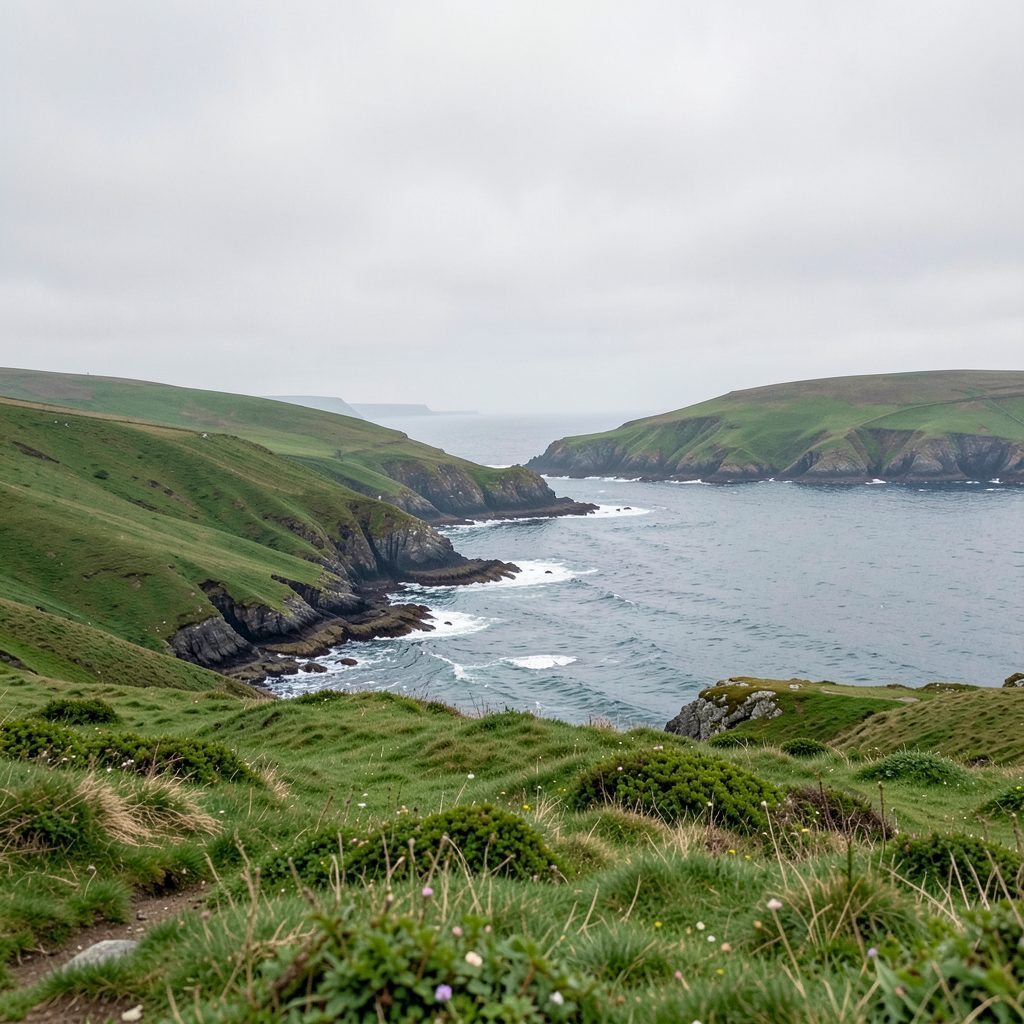
for gardeners: plant and flower names
Gardening and language learning share an unhurried rhythm. Both reward patience, observation, and a willingness to get your hands dirty. Gardeners who pick up Cornish often notice the overlap first in the vocabulary: hedgerow plants, kitchen herbs, and flowering shrubs all carry Celtic roots that stretch back over a thousand years. For Australians tending a vegie patch in Adelaide or a balcony garden in Brisbane, picking up these names adds a quiet layer of meaning to familiar tasks like pruning, sowing, and weeding.
The Cornish revival has gathered pace since the language was recognised under the European Charter for Regional or Minority Languages, and a steady stream of new speakers now reads, sings, and chats in Kernewek. Gardeners are an unusually motivated group of learners, because plants give them a ready-made vocabulary list tied to seasons, colours, and the soil under their fingernails. A weekend trip to Bunnings Warehouse or a stroll through the Royal Botanic Gardens Melbourne can turn into a self-paced lesson once you know what to look for.
The Celtic roots behind Cornish plant names
Cornish sits in the Brythonic branch of the Celtic family, alongside Welsh and Breton, which is why many plant names echo across all three. The word for oak, derowen in Cornish and derwen in Welsh, shows how a single tree ties the languages together. Place-names across Cornwall often preserve these old botanical terms, and the place-names guide on the Learn Cornish site shows how places like Penryn, Treverbyn, and Helford all carry plant references tucked inside them.
Because Cornwall was historically a maritime and farming culture, the vocabulary that survives in the language leans heavily on practical landscape features. Words for apple, willow, holly, and tree appear in old Cornish literature, and many of them still feel usable to a modern gardener. A short browse of the about Cornish section gives a useful overview of how the language grew from these agricultural roots.
Australian gardeners exploring Cornish vocabulary often find that the Celtic coastal landscape maps surprisingly well onto their own shoreline gardens. Sea thrift, heather, and flowering gorse all grow well along the southern Victorian and Tasmanian coasts, where the climate mimics Cornwall's mild, wet conditions. The parallels make vocabulary stick faster, because the plants are sitting right outside the back door.
Common Cornish flower names for the home patch
A handful of flower terms come up again and again in Cornish phrasebooks and gardening glossaries. The most useful general word is bleujen, which covers flower in the broadest sense and fits almost any bloom from a daffodil to a banksia. For flowering trees, gwedhen covers tree, and combining it with descriptors like aval (apple) lets a gardener describe a flowering apple tree as gwedhen aval in full Cornish.
The Cornish diaspora carried favourite plants around the world, which is why fuchsia and hydrangea sit comfortably in heritage gardens in the Dandenong Ranges, the Southern Tablelands of New South Wales, and parts of Tasmania. Gardeners who learn the Cornish word for flower can attach it directly to these borrowed names, producing friendly hybrids like bleujen fuchsia that sound both familiar and slightly playful.
For native Australian growers, a useful exercise is matching Cornish vocabulary to the plants growing in the same soil. A banksia in a Perth garden and a flowering gorse on the Cornish cliffs share a similar wind-sculpted habit, even though their names differ. Saying bleujen out loud while pointing at a banksia flower cements the Cornish word in long-term memory, because the act ties the word to a real plant in the same way children first pick up any language.
Trees, shrubs, and the Cornish woodland tradition
Trees carry a heavier weight in Cornish than many casual learners expect. The apple, aval, gives its name to several Cornish orchards and surnames, and Australian heritage apple varieties like the Cornish Pine and the Cornish Aromatic travelled to Tasmania with early settlers. Knowing aval alongside gwedhen (tree) and kelyn (holly) gives a gardener a small working set for talking about a backyard in any season.
The willow, helgen, is worth learning because willows thrive in damp spots that many Australian gardeners struggle with, from the creek beds of the Yarra Valley to the clay soils of suburban Perth. Willow water, made by soaking young stems, is a traditional rooting hormone, so the word has a practical use alongside its botanical meaning. The elder tree, skawen, also carries both a vocabulary lesson and a folklore history tied to Cornish hedging.
For Australian readers, comparing Cornish woodland terms with eucalyptus and acacia names can be a satisfying study habit. The Cornish word gwedhen covers tree in a general sense, while Australian English relies on Latin binomials for the same purpose. Writing both on a plant label in the garden helps cement the Cornish word in long-term memory.
Building vocabulary through everyday gardening
The fastest way to retain Cornish plant words is to attach them to a real task. Gardeners who spend their Saturday arvo at Bunnings, choosing seedlings and potting mix, can quietly rehearse the Cornish terms for what they pick up: plansek for plant, bleujen for flower, gwedhen for tree, gwydh for bush. Repeating these alongside the act of potting makes them far stickier than any rote list.
Pairing vocabulary with seasonal chores helps the words arrive at the right time of year. In a southern Australian autumn, the Cornish words for leaf (delan) and harvest (medh) match the rhythm of pruning and seed-saving. In a tropical northern Australian dry season, the focus shifts to planting, where terms like prenn (wood) and gwreydh (root) describe the work of establishing new shrubs.
Learners who want a more structured approach often turn to the online courses page, which lists self-paced options suited to busy schedules. Even fifteen minutes a week, applied during watering or composting, builds a recognisable Cornish vocabulary within a season.
Comparing common garden plants in English and Cornish
For a quick reference while working outside, the pairs below match common English garden names with their Cornish equivalents. The Cornish spellings follow the Standard Written Form, which is the most widely taught version today, and any serious learner can read further in a dictionary once the basics are in place.
| English | Cornish |
|---|---|
| Oak | derowen |
| Apple | aval |
| Willow | helgen |
| Holly | kelyn |
| Tree | gwedhen |
| Bush | gwydh |
| Leaf | delan |
| Root | gwreydh |
| Flower | bleujen |
| Plant | plansek |
| Wood | prenn |
| Harvest | medh |
A useful habit is to keep this list in a shed drawer or taped inside a potting bench lid, then tick off each word as you encounter it in the garden. After one season, most of the tree and flower names will be second nature, and the leafy and structural words follow during pruning and propagating work. Australian gardeners who talk through the list with a fellow learner tend to retain it faster than those who memorise on their own.
Useful Cornish phrases for the garden
- Dydh da — good day (a friendly opener when a neighbour drops past)
- Fatla genes? — how are you? (for casual chats over the fence)
- Meur ras — many thanks (after a neighbour shares cuttings)
- Lowen dhis — you're welcome (when handing back a borrowed tool)
Handy Cornish words for outdoor tasks
- Plansek — plant
- Hwes — sow
- Medh — harvest
- Prenn — wood or stick (useful for staking tomatoes or building trellises)
A simple way to begin this week is to label three plants in your garden with their Cornish names on small wooden stakes. Write derowen on the oak, aval on the apple, and helgen on the willow, then say each word aloud when you water. By the end of the season, those three labels will feel like old friends, and the rest of the vocabulary will follow naturally as more plants join the collection.
Stay connected with the Cornish language community.