
Discover the Cornish Language
An online resource for anyone interested in learning Cornish. Explore our phrasebook, vocabulary guides, FAQs, and a comprehensive directory of learning resources — from books and dictionaries to online courses and organisations.
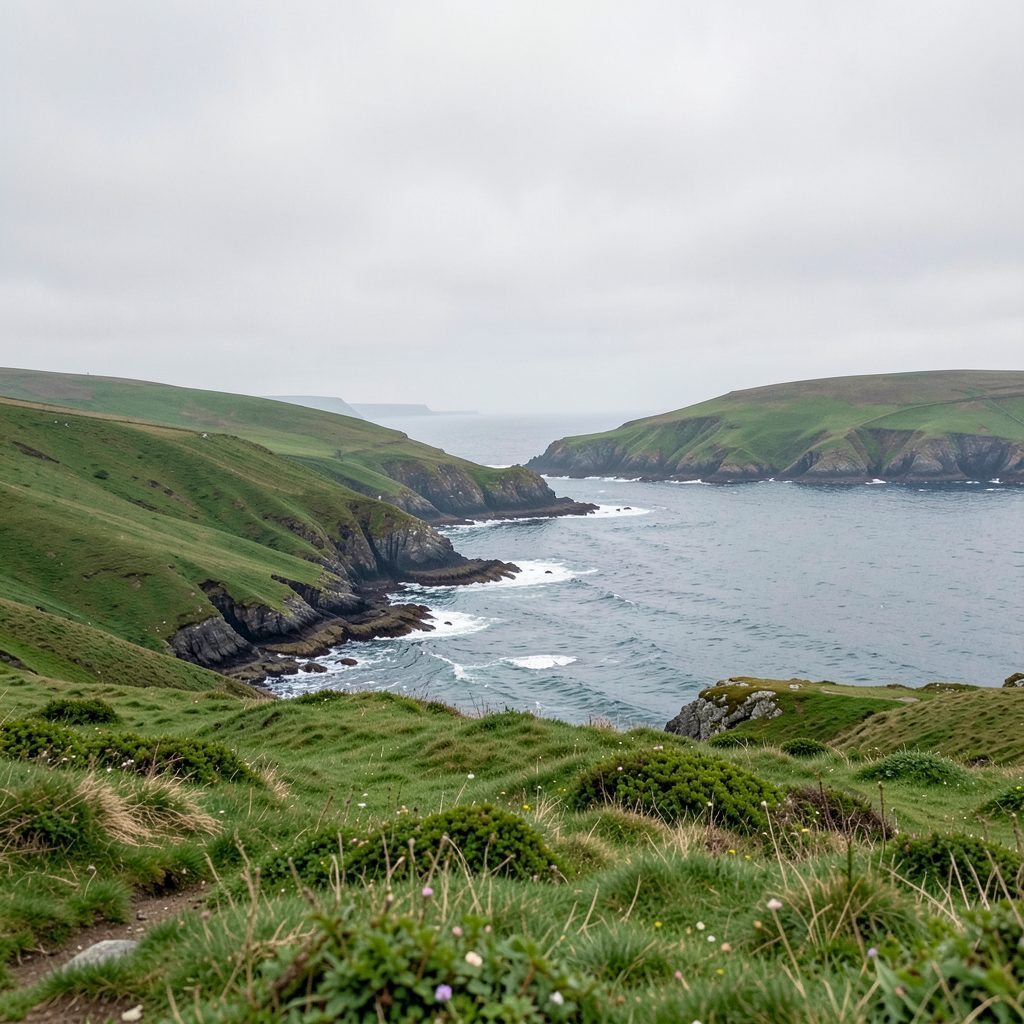
Cornish language cinema and film resources
Cornish, the Brythonic Celtic tongue revived across Kernow since the early twentieth century, has gradually found a place on screen. From community-funded shorts broadcast on regional television to quiet appearances in period dramas, the language now travels further through moving images than at almost any other moment in its modern history. Learners who once relied on phrasebooks and weekly conversation groups can now watch, rewatch, and study Cornish in context through carefully produced film work.
Watching a language in action does something that vocabulary lists cannot. Mouth shape, rhythm, idiomatic gesture, and the music of conversation all become visible, and that visibility accelerates comprehension in ways that feel almost effortless. For learners scattered outside Cornwall, in cities such as Melbourne, Sydney, or Brisbane, cinema offers a portable bridge to a community that may otherwise feel remote. It also frames the language within landscapes, humour, accents of identity, and stories that a textbook cannot fully evoke.
Australia has long embraced minority languages through its public broadcasters and film festivals, so Cornish finds unusually fertile ground here. SBS regularly programs Celtic content, Melbourne's ACMI hosts retrospectives of small-language cinema, and the Australian Classification Board routinely rates independent international films. None of these structures were built for Cornish, yet each one makes it easier for an Australian learner to access Cornish material legally and on a familiar platform.
What follows is a practical map of Cornish film: where to find documentaries, which features carry Cornish dialogue, how Australian learners can stream or borrow this material, and how to weave viewing into a sustainable study routine. The aim is not exhaustive coverage but reliable, current pointers shaped for someone who lives far from Penzance but still wants the language to live on their screen.
The state of Cornish language film today
Production in Cornish has shifted from occasional one-off projects to a steadier rhythm of shorts, web episodes, and educational pieces funded through cultural organisations and crowdfunding. The revival, declared complete in 2010 by the language's standardisation body, gave new confidence to filmmakers who wanted to work without subtitles for local audiences. Today, even modest productions often include full Cornish dialogue, and several have travelled to international Celtic film festivals in Galicia, Brittany, and the Irish Gaeltacht.
Australian viewers tend to discover this material through multicultural broadcasters rather than commercial cinema chains. SBS, in particular, has a long tradition of supporting lesser-used European languages, and Cornish has begun appearing in its NITV-sourced cultural strands and online catch-up library. While a full-length Cornish feature remains rare, the volume of well-crafted short work has grown enough that a dedicated learner can spend several evenings immersed without repetition.
Distribution remains the bottleneck. Without dedicated theatrical release in Australia, films circulate through festivals, community screenings, and online platforms. Some appear briefly on the ABC's iView as part of broader Celtic seasons, and others turn up through state libraries that maintain world-cinema collections. Australian Classification Board stickers appear on most packaged media, giving learners a familiar reassurance about content suitability before they commit viewing time.
| Resource | Format | Cornish content | Australian access | Best for |
|---|---|---|---|---|
| The Cornish Language | Documentary | Interviews, archival footage | SBS catch-up, community screenings | Beginners wanting history |
| Bewnans Kernow | Period drama | Full Cornish dialogue | Festival circuit, online rentals | Intermediate learners |
| Cornish shorts on YouTube | Web episodes | Mixed Cornish and English | Direct streaming | Daily listening practice |
| BBC Cornwall output | News, features | Spoken Cornish clips | VPN or iView pick-ups | Accent familiarisation |
| Celtic film festival picks | Various | Cornish plus Celtic peers | Travelling festivals in Australia | Cultural immersion |
Documentary highlights about the Cornish tongue
Documentary remains the most accessible entry point for Australian learners new to Cornish cinema. Several productions over the last twenty years have traced the language's revival with patience and warmth, mixing archival footage with interviews in Cornish itself. These films rarely demand prior fluency, yet they reward it generously: scenes that pass unnoticed on first viewing open up on the second, when phrases overheard in interviews begin to settle into memory.
Two documentaries stand out for learners building a viewing habit. The Cornish Language, released in the early 2000s, remains a foundational watch, pairing speakers from different generations with historical footage of the last fluent native speakers of the late nineteenth century. Bewnans Kernow, a more recent community production, dramatises moments from Cornish history in fully Cornish dialogue and serves almost as period drama for the dedicated student. Together they bracket the language's modern story in approachable form.
SBS and the ABC occasionally license these titles for themed seasons, particularly during Celtic heritage weeks. Melbourne's Australian Centre for the Moving Image has screened Cornish shorts alongside Welsh and Breton work in its smaller theatres, and the Sydney Film Festival has hosted Cornish-linked documentaries in its documentary strand. None of these guarantee a permanent home for the work, but they do create occasional windows when an Australian learner can experience Cornish cinema in a proper cinema seat.
Where to look first
- SBS On Demand's Celtic and minority-language collections, refreshed each season
- State Library of Victoria's world-cinema lending desk, which holds Cornish shorts
- Cornish-language YouTube channels produced by speakers in Truro and Penryn
- University libraries in Adelaide and Perth that maintain Celtic studies collections
Feature films and TV with Cornish dialogue
Long-form Cornish content is thinner than short-form work, but it exists, and it rewards viewers who know what to look for. A handful of British television productions set in Cornwall have included scenes of Cornish dialogue, sometimes only a line or two, sometimes extended sequences. These moments are easy to miss on first viewing, yet they offer a chance to hear the language as it sounds in everyday, off-script conversation rather than in rehearsed interview settings.
Period dramas set in fishing villages, tin mines, and Celtic Christian communities have provided the richest seam. Productions such as Poldark and various BBC Sunday-evening dramas occasionally drop Cornish phrases into market scenes and chapel gatherings, and the producers often credit local Cornish-language advisors. Watching with subtitles on first pass, then again without, builds a small but satisfying vocabulary bank drawn directly from narrative context.
For learners in Hobart, Adelaide, or Perth, accessing these titles usually means streaming platforms that operate in Australia. BBC iPlayer remains geographically restricted, but a number of Cornish-linked productions appear on BritBox, Stan, and the ABC's international drama slate. Library services such as the State Library of Victoria and the National Library of Australia in Canberra hold British television collections that can be borrowed through inter-library loan, which is occasionally the only reliable route to older Cornish dialogue scenes.
Online archives, streaming and free resources
The internet has done more than any other channel to make Cornish cinema available worldwide, and Australian learners benefit disproportionately because distance once made Cornish cultural events inaccessible. A handful of dedicated YouTube channels now post regular Cornish-language content, ranging from short narratives to educational series designed for classroom use. The Cornish Language Partnership has supported several of these projects, and they typically come with optional English subtitles.
Podcasts and video blogs fill in the gaps between scripted productions. Several speakers based in Truro, Falmouth, and the wider Penwith area maintain weekly vlogs that mix Cornish conversation with regional news, giving learners something close to a daily listening companion. These do not replace cinema, but they offer the steady ambient exposure that makes a feature film far easier to follow when it appears on the schedule.
Free viewing resources often lead learners back to a paid path. The Learn Cornish resources page gathers films, audio, and learning aids in one place, and it is a sensible bookmark for any Australian student building a personal library of Cornish material. From there, learners can branch into paid streaming, festival tickets, or community memberships that fund further Cornish production.
Quick ways to find Cornish content online
- Search YouTube with the subtitle filter set to Cornish for richer results
- Subscribe to RSS feeds of Cornish cultural organisations that publish new releases weekly
- Join mailing lists of Celtic studies associations in Australia for screening announcements
- Use the ABC's iView search for Cornwall to surface Celtic heritage programming
Building a viewing habit that supports your Cornish studies
A common mistake among self-directed learners is to binge-watch once and then abandon film as a study tool. Cornish is a small language with limited film output, so pacing matters more than volume. Setting aside one evening a week for a Cornish or Cornish-linked film, paired with a weekday podcast or short, tends to produce steadier retention than a weekend marathon followed by weeks of silence.
Pairing films with active study deepens the benefit. Watching a scene twice, first with English subtitles and then without, then writing down five phrases overheard, gives the language somewhere to settle. Reviewing those notes before the next viewing session builds a chain that slowly lengthens. Australian learners often find this works well when scheduled around Sunday-afternoon screenings at independent cinemas in Fitzroy, Newtown, or Fremantle, where Cornish shorts sometimes appear in Celtic retrospectives.
Tracking new releases helps too. Following Cornish film organisations on social media, signing up for festival newsletters, and checking the gokken-geluk-of-strategie guide for current production tips keeps the catalogue fresh in your mind. And when Australian licensing rules shift, as they did recently with the albury-pokies-curfew changes affecting late-night venue content, keeping an eye on classification updates helps you know which Cornish titles will pass through your usual screening channels.
Cornish cinema is small, patient, and quietly growing. Pick a film from the table, set a viewing date for the coming weekend, and keep a notebook open beside the screen while you press play.
Stay connected with the Cornish language community.