Discover the Cornish Language
An online resource for anyone interested in learning Cornish. Explore our phrasebook, vocabulary guides, FAQs, and a comprehensive directory of learning resources — from books and dictionaries to online courses and organisations.
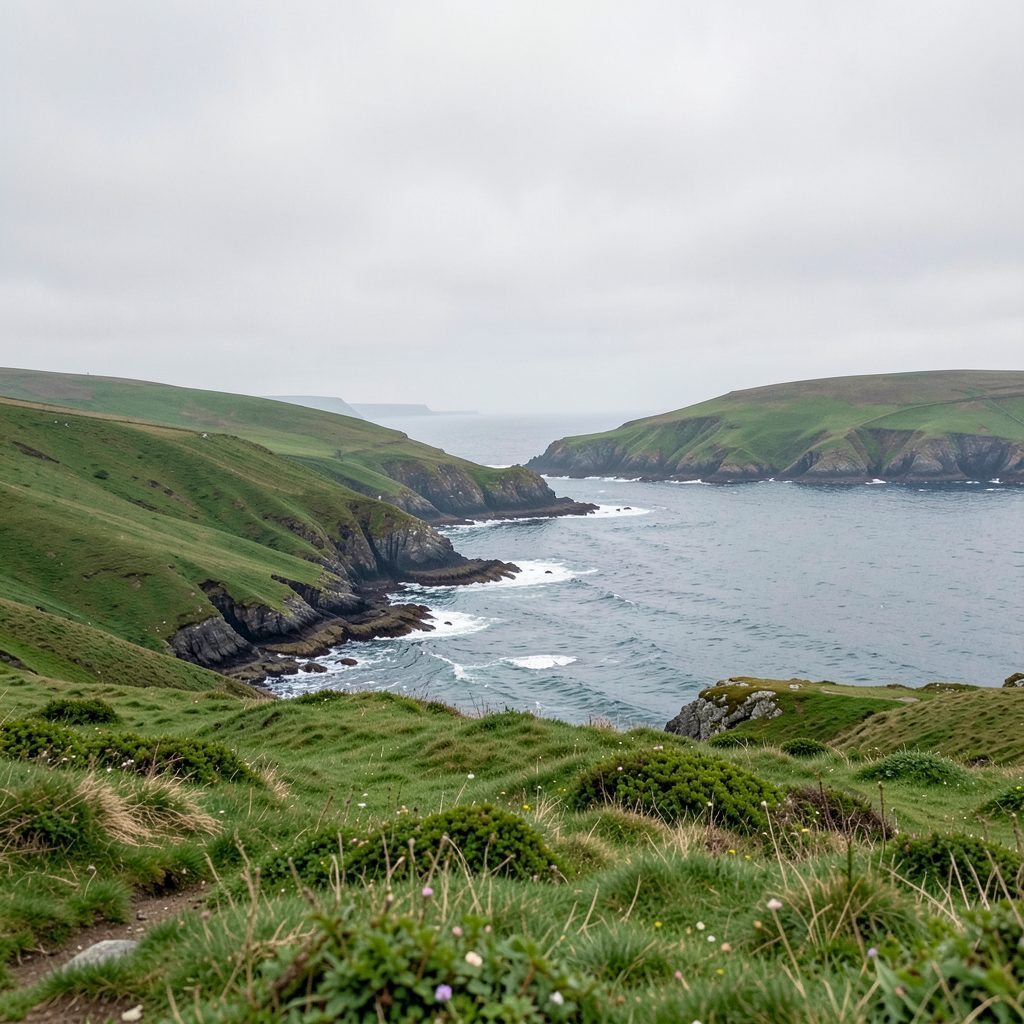
Cornish and the sea: maritime words from a coastal Celtic tongue
Cornwall has always been shaped by the rhythm of the tides. With a jagged coastline battered by Atlantic swells and a centuries-old tradition of fishing, trading, and piloting ships through treacherous waters, the region's identity is inseparable from the sea. The Cornish language, revived over recent decades, preserves this maritime outlook in words and phrases that once rang across harbours from Penzance to Padstow.
For learners in Australia, the Cornish maritime lexicon offers more than vocabulary practice. It opens a window onto Celtic coastal traditions that echo along the southern shores of Victoria, the fishing wharves of Hobart, and the Cornish diaspora communities that shaped towns like Moonta and Burra in South Australia during the 19th century. Studying these terms becomes a small bridge between hemispheres, linking Australian beach culture to the ancient seafaring life of southwest Britain.
The Celtic tide: Cornwall's maritime heritage
Long before English dominated the British Isles, Cornish sailors, fishermen, and merchants spoke a Brythonic Celtic tongue rich with seafaring imagery. The word for "harbour" in Cornish, "porth," appears across the map in place names such as Porthtowan, Porthleven, and Port Isaac. "Mor" means sea, and "kernewek," the language's own name, has etymological ties to the rocky headlands that Cornish fishing vessels once navigated in search of mackerel and pilchards.
This maritime inheritance runs deep. The Cornish pasty was originally a portable meal for fishermen and tin miners heading out to sea or down the shafts. Pilchard fishing was once so central to the local economy that communities developed specialised vocabulary for the boats, the nets, the curing process, and the seasonal rhythms of the catch. Words like "huer," the lookout who shouted when shoals of fish appeared, captured an entire worldview in a single syllable.
For modern learners, this heritage means that maritime vocabulary in Cornish is not an afterthought. It forms part of the linguistic backbone, reflecting how coastal communities across the Celtic world encoded their relationship with water into everyday speech. Recognising these terms helps students understand why place names, folk songs, and traditional recipes in Cornwall feel so saturated with salt and weather.
Essential nautical terms in Cornish
Building a working maritime vocabulary in Cornish begins with a few key building blocks. "Lester" refers to a ship or vessel, while "mara" or "mor" denotes the open sea. A sailor might speak of "skath" for a boat, with "skath byghan" meaning a small boat or skiff. The Cornish word for harbour, "porth," doubles as a directional and locational concept in many coastal communities and remains instantly recognisable in town signs.
Useful weather and sea-state vocabulary includes "gowl" for wind, "glaw" for rain, and "tonnow" for waves. When conditions turn dangerous, a sailor might describe a storm as "komen" or refer to heavy seas as "moryow bras." Those learning practical phrases for a coastal visit will find the Cornish phrasebook a useful starting point for pronunciation and everyday usage.
Directional terms also carry Celtic character. "North" in Cornish is "north," but words like "soth" (south) and "west" retain recognisable forms, while traditional navigation relied on landmarks and currents rather than the compass headings familiar to modern sailors. Understanding these terms gives learners insight into how Cornish seafarers conceptualised the waters around them long before standardised charts appeared in the wheelhouse.
Comparing maritime vocabulary across Celtic tongues
Cornish belongs to the Brythonic branch of Celtic languages, sharing ancestry with Welsh and Breton. The three tongues have evolved separately for centuries, yet maritime vocabulary often shows striking similarities, reflecting shared coastal experiences and continuous exchange between fishing communities along the Atlantic seaboard. The table below compares a few essential sea-related words across these languages and their English equivalents.
| English | Cornish | Welsh | Breton |
|---|---|---|---|
| Sea | mor | môr | mor |
| Harbour | porth | porth | porzh |
| Boat | skath | cwch | bage |
| Fish | puskes | pysgod | pesked |
| Storm | komen | storm | barr-amzer |
| Wave | tonnow | ton | gwagen |
These parallels reveal how closely connected the Celtic maritime cultures remained, even after political and geographic separation. A Breton fisherman and a Cornish sailor would have recognised many of the same root concepts, even if centuries of drift had shifted pronunciation and spelling. For language learners, recognising these patterns speeds up acquisition and deepens appreciation of the shared Celtic seafaring worldview that stretched from Land's End to the Brittany coast.
Fishing communities and coastal language
Cornish fishing villages developed their own micro-vocabulary tied to specific catches, tides, and equipment. "Hevva!" was the traditional cry of the pilchard fishermen launching their nets, a shout that echoed across coves for generations and even inspired a popular folk song. "Droll" referred to a type of traditional lure, while "lugger" described the specific sailing rig favoured by west Cornish fishing fleets operating out of Newlyn and Mousehole.
These communities were tightly knit, and language reflected social hierarchy aboard the boats. The skipper, known as "master," directed the crew, while roles like "bowman" and "huer" carried specialised duties and linguistic labels. Learning these terms gives modern students a window into the working life of a pilchard seine crew or a mackerel drift-net operation in the years before industrial trawling reshaped the industry.
Beyond fishing, the coast produced vocabulary for trade, smuggling, and coastal travel. "Koes" meant a causeway or coastal path, useful when cliffs blocked the inland route. "Revel" referred to a low-tide gathering or celebration, often connected to shellfish harvesting. Together, these words paint a picture of communities whose daily existence was dictated by the sea's rhythms and the coast's geography, communities that left linguistic footprints still visible in modern Cornish.
Australian shores: Cornish heritage down under
The Cornish maritime legacy reached Australian shores through 19th-century migration, particularly during the copper mining boom in South Australia. Towns such as Moonta, Kadina, and Burra became known as "Little Cornwall," with thousands of Cornish miners and their families bringing their language, food, and customs to the southern hemisphere. While the Cornish language itself did not survive in these isolated communities, maritime vocabulary persisted in place names, fishing traditions, and family lore passed down through generations.
Australian coastal cities carry their own Celtic echoes. Melbourne's annual Celtic Festival celebrates Cornish, Welsh, Irish, and Scottish heritage, drawing thousands to events that blend traditional music with contemporary Australian culture. In Hobart, the working fishing fleet at Salamanca Wharf maintains practices with surprising parallels to Cornish methods, while Sydney's sailing clubs preserve maritime traditions that resonate with the Cornish love of competitive seafaring on open water. Even Geelong, a port city with strong Victorian-era Cornish connections, retains cultural links through historical societies and heritage walks that trace the migration story.
For learners based in cities like Perth, Brisbane, or Adelaide, studying maritime Cornish becomes a way to explore both Celtic roots and Australian coastal identity. The vocabulary connects two hemispheres, linking the granite cliffs of Land's End with the sandy beaches of the Australian coast through a shared human relationship with the sea that transcends national boundaries.
Building your maritime Cornish vocabulary
Learning maritime Cornish works best when paired with practical context. Students who visit Cornish ports, read traditional fishing songs, or explore Celtic festivals absorb vocabulary in ways that pure memorisation cannot match. For Australians interested in heritage travel, a trip to Moonta or a Cornish-themed event in Ballarat offers a tangible connection to the language's diasporic history and the communities that carried it across the world.
A few practical suggestions for building this vocabulary effectively:
- Listen to recordings of Cornish sea shanties and traditional fishing songs to absorb pronunciation and rhythm naturally.
- Use a phrasebook alongside nautical charts or maps of the Cornish coast to anchor words in real geography.
- Join online Cornish language forums where maritime vocabulary often surfaces in cultural discussions.
- Compare Cornish words with Welsh and Breton equivalents to strengthen pattern recognition across Celtic languages.
- Visit Cornish heritage sites in South Australia or attend Celtic festivals in Melbourne to connect vocabulary with lived community traditions.
For specific questions about pronunciation, grammar, or course options, learners can consult the frequently asked questions section for guidance on study pathways and resources suited to different experience levels.
The maritime vocabulary of Cornish offers more than a list of words. It preserves a way of seeing the world, one in which the sea is not a barrier but a living, breathing companion that shaped identity, community, and language itself. As learners in Australia study terms like "mor," "porth," and "huer," they participate in a conversation that stretches from the cliffs of Cornwall to the fishing ports of Hobart and the heritage streets of Moonta. Remember that every maritime word carries with it the salt air of two hemispheres, and that learning them means carrying forward a coastal Celtic tradition that refuses to drift into forgetting.
Stay connected with the Cornish language community.