Discover the Cornish Language
An online resource for anyone interested in learning Cornish. Explore our phrasebook, vocabulary guides, FAQs, and a comprehensive directory of learning resources — from books and dictionaries to online courses and organisations.
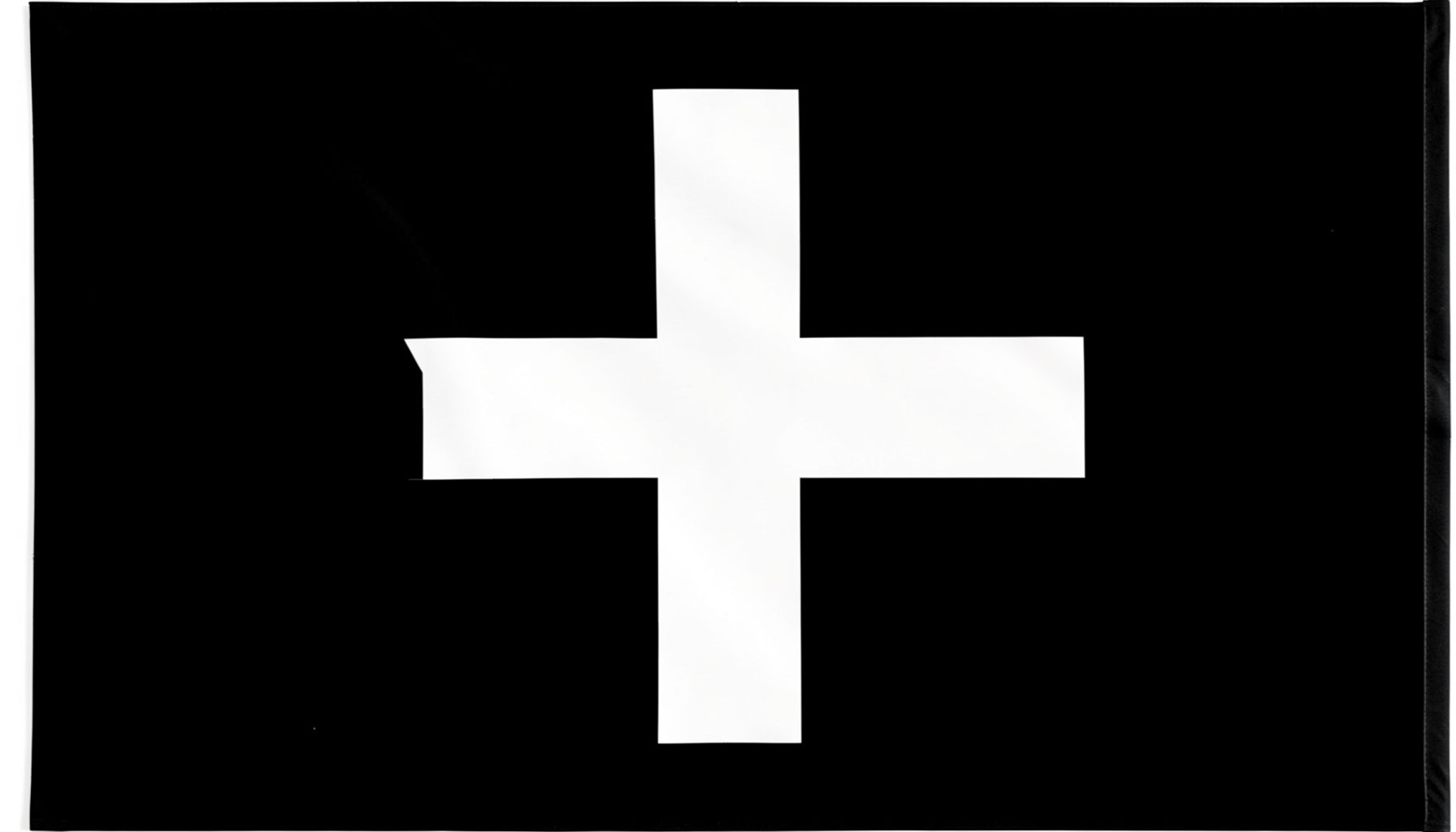
Cornish language and the Cornish flag (St Piran’s Cross)
The Cornish language, known as Kernewek, and the flag of St Piran are closely connected expressions of Cornwall’s identity. The white cross on a black field is instantly recognisable across the county, while Kernewek carries the sounds, place names and cultural memory of a Brythonic language that developed in the far south-west of Britain.
For learners in Australia, exploring the flag can provide a useful starting point for understanding Cornish history. It opens a path towards everyday vocabulary, traditional stories, local geography and the living revival of a Celtic language. A Cornish society in Melbourne, a family researching ancestry in Ballarat or a visitor walking through Adelaide’s heritage districts can all use the same symbols to connect with Cornwall from a long distance away.
The story behind St Piran’s Cross
St Piran’s Cross is usually shown as a simple white cross on a black background. The design is associated with Saint Piran, Cornwall’s patron saint and the patron saint of tin miners. Cornwall celebrates St Piran’s Day on 5 March, when people may wear black, white and gold, attend parades, sing Cornish songs and take part in community events.
The colours have acquired several meanings. Black is often linked with the dark rock or mineral wealth of Cornwall, while white may suggest tin, one of the county’s historic exports. Gold can represent the sun, prosperity or the precious metal associated with Cornwall. The flag itself is generally regarded as a modern emblem of Cornish identity, even though the traditions surrounding St Piran are much older.
The historical details are not entirely settled. Stories about Saint Piran connect him with Ireland, mining and miraculous discoveries of tin, but the surviving evidence is mixed. Some older crosses and local symbols have been associated with the design, yet the modern flag became especially prominent through Cornish cultural and political movements. This blend of legend, landscape and historical interpretation is common in regional identity: a symbol can matter deeply even when every part of its origin cannot be proved.
How the flag relates to Kernewek
The flag does not contain written Cornish, but it represents many of the same ideas that motivate language learners. Both symbols express continuity with Cornwall’s past, pride in local traditions and a desire to keep a distinctive culture visible. A black-and-white flag at a festival can therefore sit naturally beside greetings in Kernewek, traditional music and discussions about Cornish place names.
Cornish belongs to the Brythonic branch of the Celtic languages, alongside Welsh and Breton. It is related to the older language once spoken across much of Britain, rather than to English or Irish Gaelic. Over centuries, English gradually replaced Cornish in everyday life. The language survived in fragments, books, family records and place names before a determined revival gathered strength from the late nineteenth century onwards.
Modern learners may encounter several spelling conventions and styles, reflecting different periods of revival and standardisation. Kernewek words can look unfamiliar at first, but pronunciation and vocabulary become easier when studied in small, useful groups. Greetings, numbers, family terms and names of places offer accessible entry points. A learner who recognises elements in names such as Penzance, Falmouth or Bodmin begins to see the landscape as evidence of an older language.
The connection is particularly meaningful for Australians with Cornish ancestry. South Australia has strong historic links with Cornish mining communities, especially around places such as Moonta, Wallaroo and Kapunda. In those towns, heritage festivals, mining museums and family histories often preserve memories of migration from Cornwall. Reading a Cornish name or hearing a traditional phrase can add a linguistic dimension to that history.
Reading Cornwall through language and colour
A flag is easy to recognise, but a language gives cultural detail to the people and places represented by it. Cornish vocabulary can reveal connections with the sea, farming, mining, weather and community life. Even a short phrasebook introduces patterns that English translations can flatten. Learning the original terms helps explain why certain names recur across Cornwall and why local identity remains strongly tied to the land.
For Australian learners, the comparison with regional language revival may be useful. Aboriginal and Torres Strait Islander languages are maintained and revitalised by communities across Australia, with language closely connected to Country, family and cultural authority. Cornish revival has a different history and must not be treated as equivalent, yet the comparison shows why a language can be important even after everyday use has declined. In both cases, learning requires respect for community context rather than collecting words as decorative souvenirs.
| Feature | Cornish language | St Piran’s Cross |
|---|---|---|
| Cornish name | Kernewek | Baner Sen Peran |
| Main form | A revived Celtic language | A flag with a white cross on black |
| Cultural role | Preserves words, sounds, stories and place-name traditions | Makes Cornish identity visible in public spaces |
| Common associations | Cornwall, Celtic heritage, mining and local history | St Piran, tin mining, Cornwall and community pride |
| Ways to engage | Classes, dictionaries, online courses, songs and conversation | Parades, displays, festivals, craft, music and heritage events |
| Australian connection | Ancestry research, cultural groups and language study | Seen at Cornish gatherings and heritage celebrations |
The Cornish flag can also help learners remember vocabulary. A picture of a flag beside a mining landscape, a coastal village or a St Piran’s Day parade creates a visual association for new words. This works well for families and community groups, especially when learning takes place outside formal classrooms. A small display at a local library or cultural event can introduce people to Kernewek without requiring prior knowledge.
Learners can follow current language and cultural activities through Cornish language news, then use those topics as prompts for vocabulary practice. News about events, publications or community projects provides more meaningful material than isolated word lists, since it shows how the language belongs to real people and present-day activity.
Celebrating Cornish identity in Australia
Cornish heritage has a particularly visible place in parts of Australia. During the nineteenth century, miners and families from Cornwall travelled to Australia, bringing mining knowledge, Methodist traditions, music, food and community customs. South Australia’s Copper Coast is one of the clearest examples, with Moonta often described as “Little Cornwall” because of its strong Cornish heritage.
St Piran’s Day events in Australia may include pasties, saffron cake, singing, dancing, mining displays and the flying of the black-and-white flag. These gatherings can feel familiar and local at the same time: a heritage hall in regional South Australia, a community event in Melbourne or a family gathering in Perth may recreate elements of Cornish tradition under Australian skies. The style of English used around the event will naturally be Australian, with local expressions and pronunciation, while the cultural focus remains Cornish.
Food illustrates how migration changes tradition. A Cornish pasty is widely known in Australia, but local bakeries may adapt fillings, pastry methods and serving styles to Australian tastes. The same process can occur with language. A learner may use Kernewek greetings at a festival, discuss ancestry in English and explain Cornish place names to friends who have no family connection with Cornwall. Cultural practice remains genuine when it is learned carefully and connected to history rather than presented as a costume.
Australian geography also creates practical differences. Someone in Hobart may associate Cornwall’s rugged coastline with Tasmania, while a learner in Brisbane may picture the cooler Atlantic climate through photographs and family stories. Those comparisons can make vocabulary memorable, though they should not erase the particular meaning of Cornish landscapes. Learning works best when similarities are used as bridges and local differences are acknowledged.
Learning the language through the symbol
The flag offers an approachable first lesson, but it should lead beyond symbolism. Begin with the name St Piran’s Cross, the date of St Piran’s Day and a few words connected with Cornwall. Then add greetings, simple descriptions and place names. Writing a short caption in Kernewek for a flag image can combine spelling, pronunciation and cultural knowledge in one activity.
A learner might create a vocabulary card with the flag on one side and a Cornish word on the other. A family could label a map of Cornwall, trace an ancestor’s mining journey from Cornwall to South Australia, or listen to Cornish music while following a translation. Community groups may use the flag as a visual theme for a monthly language session, provided the session includes reliable resources and respectful context.
Health and everyday life are useful areas for developing practical confidence. After learning basic greetings, a student can move into descriptions of the body, feelings and wellbeing through a focused health vocabulary guide. This kind of vocabulary shows that Kernewek is more than a historical subject: it can be used to discuss ordinary experiences and modern needs.
The flag can remain a steady reminder of purpose. It represents a community and a history, while the language gives learners a way to engage with that heritage more deeply. For Australians, a practical routine might be to study a few Kernewek words each week, read a Cornish place-name explanation, and mark St Piran’s Day with a meal, song or local heritage visit. The useful takeaway is simple: let the flag open the door, then use the language to walk further into Cornwall’s living culture.
Stay connected with the Cornish language community.